
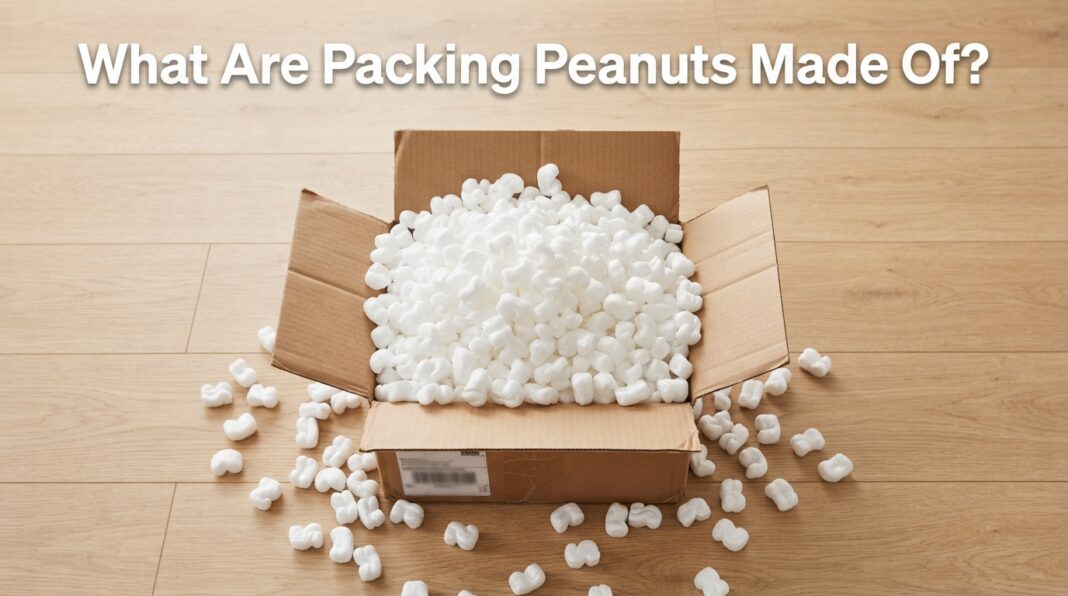
You open a box, dig through a pile of loose, curly filler, and pull out whatever you actually ordered. Simple enough. But have you ever wondered what those little S-shaped pieces are actually made from?
So, what are packing peanuts made of? There are really only two answers, and they couldn’t be more different. Most peanuts are made from expanded polystyrene foam, the same petroleum-based plastic used in coffee cups and coolers. The other kind is made from plant starch, usually corn, wheat, or potato, and it dissolves in water like a stale cracker.
Both do the same job inside a shipping box. Neither behaves the same way once you’re done with them. Knowing which one you’re holding changes how you should get rid of it, and it explains a lot about why some peanuts vanish in your sink while others sit in a landfill for centuries.
The Two Main Materials Behind Packing Peanuts
Almost every packing peanut on the market falls into one of two categories. Once you know what to look for, telling them apart takes about ten seconds.
Expanded polystyrene (EPS), better known by the trademarked name Styrofoam, has been the standard packing filler since the 1960s. It’s made by expanding tiny polystyrene beads with steam until they puff up into a lightweight foam, then shaping that foam into the familiar S-curl or peanut form.
Starch-based peanuts, sometimes called biodegradable or dissolvable peanuts, are made from natural plant starches, most commonly corn, wheat, or potato starch, sometimes even sorghum grain. Manufacturers heat and extrude the starch under pressure, which causes it to puff up in much the same way popcorn does, creating a similarly light, cushioning shape.
| Feature | Polystyrene (EPS) Peanuts | Starch-Based Peanuts |
|---|---|---|
| Base material | Petroleum-derived plastic | Corn, wheat, or potato starch |
| Color | Usually white or pink | Usually off-white or light green |
| Water reaction | Stays intact | Dissolves within minutes |
| Compostable | No | Yes, in most home compost systems |
| Static cling | Yes, clings to skin and clothing | No |
| Decomposition time | Hundreds of years | Weeks in the right conditions |
Neither material is inherently “better” at cushioning fragile items. The real difference shows up after the box is unpacked and the peanuts are sitting in a pile on your floor.
Where Foam Packing Peanuts Actually Come From
Polystyrene itself starts as a byproduct of oil and natural gas refining. Manufacturers convert this raw material into small plastic beads called polystyrene resin.
Those beads get treated with a blowing agent, then exposed to steam, which causes them to expand to many times their original size and fuse together into a solid foam block. From there, the foam gets shaped into the individual S-curled peanuts you recognize from shipping boxes.
The finished product is roughly 95 to 98 percent trapped air, which is exactly why a huge box of peanuts weighs almost nothing. That same air-filled structure is what makes EPS such an effective shock absorber for anything fragile riding around in a delivery truck.
You’ll notice foam peanuts come in a couple of different colors, and the color isn’t random:
- White peanuts are typically made from virgin (never-before-used) polystyrene resin.
- Green peanuts often contain a significant percentage of recycled polystyrene content.
- Pink peanuts usually include an antistatic treatment, designed specifically for packing electronics, which unfortunately makes them harder to recycle since the coating can’t be separated out easily.
There’s also a persistent myth worth clearing up. Styrene, the chemical building block of polystyrene, does occur naturally in small amounts in everyday foods like coffee, cinnamon, and strawberries. Health authorities that evaluate food packaging materials have consistently found that exposure to styrene from polystyrene products remains well below established safety limits. That doesn’t mean you should eat a packing peanut on purpose. It just means the material itself isn’t the hazard people sometimes assume it is.
Where Biodegradable Packing Peanuts Come From
Starch-based peanuts trace back to the early 1990s, when growing concern about landfill waste pushed manufacturers to look for a plant-based alternative to foam.
The process starts with raw starch, most often extracted from corn kernels, wheat, or potatoes. That starch gets processed through an extruder, a machine that applies heat and pressure to force the material through a shaped opening, similar to how pasta or breakfast cereal is made.
As the starch exits the extruder, the sudden drop in pressure causes it to expand and puff up, creating a light, airy texture almost identical in feel to foam. One of the earliest biodegradable brands, Biofoam, used grain sorghum instead of corn, and other manufacturers have experimented with wheat and potato starch depending on regional crop availability and cost.
Because the sugar content is processed out during manufacturing, starch peanuts aren’t an attractive food source for pests, which addresses one of the more common concerns people raise before trying them.
How to Tell Which Type You’re Holding
This test takes about thirty seconds and doesn’t require any special equipment.
Drop a single peanut into a glass of warm water. If it dissolves into a cloudy, slippery residue within a few minutes, it’s starch-based and safe to rinse down the drain or toss in a compost bin. If it floats there completely unchanged, it’s polystyrene foam, and it belongs in a landfill bin or a dedicated recycling drop-off, never your compost pile.
Color can offer a hint before you even reach for water. Starch peanuts tend to run off-white to light green, while foam peanuts are typically bright white or pink. That said, color alone isn’t a guarantee, so the water test remains the most reliable method.
Why the Material Choice Actually Matters
It’s easy to assume packing filler is a minor detail in the shipping process, but the material choice ripples outward in ways that affect your trash bin, your local landfill, and even your grocery bill for years afterward.
Polystyrene doesn’t break down quickly. Once it ends up in a landfill, it can persist for centuries without meaningfully decomposing. It’s also lightweight enough to blow around outdoors, which is part of why loose foam shows up in waterways and along roadsides more often than heavier packaging materials.
Starch-based peanuts return to the earth fast. Because they’re built from the same organic compounds found in food crops, they break down through normal composting or even just prolonged moisture exposure, typically within a matter of weeks rather than centuries.
Cost and performance still favor foam for now. Foam peanuts are cheaper to manufacture and slightly better at resisting moisture during long transit, which is part of why large-scale shippers still default to polystyrene despite its environmental drawbacks. Starch peanuts also weigh a bit more per volume, which can nudge up shipping costs on heavier loads.
Neither should go in your curbside recycling bin. Most municipal recycling programs are not equipped to sort or process either loose foam or starch filler, since both tend to jam sorting equipment or contaminate other recyclable material. Foam has dedicated drop-off points instead, while starch peanuts belong in compost, not the recycling stream.
Expert Tip: Reuse Before You Recycle
Before sending peanuts anywhere, consider whether you’ll be shipping anything yourself in the next few months. Foam peanuts, in particular, hold up well to repeated reuse and lose none of their cushioning ability the second or third time around. Many shipping and mailing stores will happily take clean, unused peanuts off your hands if you don’t have a use for them, since it saves them from having to buy new filler.
Pros and Cons of Each Type
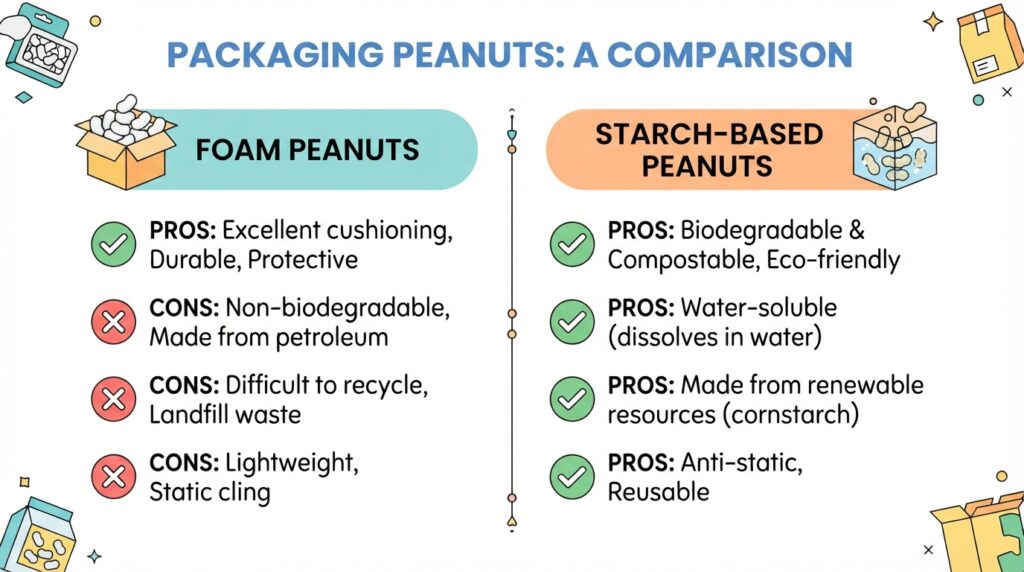
Neither material wins on every category, which is exactly why both are still in wide use.
Foam (Polystyrene) Peanuts
Pros:
- Extremely cheap to produce and buy in bulk
- Naturally resistant to moisture and humidity
- Lightweight, which helps keep shipping costs down
- Long shelf life if stored and reused
Cons:
- Takes centuries to break down in a landfill
- Not accepted in most curbside recycling programs
- Prone to static cling, sticking to hands, hair, and clothing
- Can scatter easily outdoors due to its light weight
Starch-Based Peanuts
Pros:
- Fully compostable and dissolves quickly in water
- Non-toxic if a pet or child accidentally gets into them
- No static cling
- Made from renewable crop-based materials
Cons:
- Slightly more expensive to manufacture
- More sensitive to moisture during storage and shipping
- Heavier per volume, which can raise shipping weight
- Not as widely stocked by budget shipping suppliers
What to Do With Packing Peanuts Once You’re Done With Them
Getting rid of packing peanuts responsibly takes a few extra minutes, but it keeps them out of places they shouldn’t end up.
- Run the water test first to confirm which material you’re dealing with before deciding how to dispose of it.
- Compost starch-based peanuts in a home compost bin, or simply dissolve them under running water and let them go down the drain in small amounts.
- Save foam peanuts for reuse in your own future shipments, since they don’t lose their cushioning properties with reuse.
- Locate a dedicated foam drop-off point if you have more foam peanuts than you’ll ever reuse. Many shipping and packaging stores accept clean, loose foam peanuts for reuse in their own outgoing packages, and a searchable directory of expanded polystyrene recycling drop-off locations can help you find the closest option.
- Avoid the trash as a first option. It’s the easiest route, but it’s also the one that sends foam straight to a landfill where it will outlast everyone reading this article.
For a broader look at sorting out foam versus other shipping materials in your area, a regularly updated recycling search guide for packing materials can help you find local options beyond just the manufacturer directories.
Frequently Asked Questions
What are packing peanuts made of, exactly?
Most are made from expanded polystyrene foam, a petroleum-based plastic. The more eco-friendly alternative is made from plant starch, usually corn, wheat, or potato, which dissolves in water and breaks down through composting.
Are packing peanuts toxic if a pet or child eats one?
Starch-based peanuts are non-toxic and made from food-grade plant starches, though they aren’t manufactured under food-safe conditions, so eating them on purpose still isn’t recommended. Foam peanuts aren’t considered acutely toxic either, but they pose a choking hazard and shouldn’t be swallowed.
How can I tell if my packing peanuts are biodegradable?
Drop one into a glass of warm water. If it dissolves within a few minutes, it’s starch-based and biodegradable. If it floats intact, it’s polystyrene foam.
Can I put packing peanuts in my recycling bin?
Generally, no. Most curbside recycling programs don’t accept either type, since they’re too lightweight and small for standard sorting equipment. Foam needs a dedicated drop-off location, while starch-based peanuts belong in compost instead.
Why do some packing peanuts stick to my hands and clothes?
That’s static cling, and it’s specific to polystyrene foam peanuts. Starch-based peanuts don’t carry the same electrostatic charge, which is one of the small but noticeable perks of the biodegradable version.
Final Thoughts
Packing peanuts look interchangeable sitting in a shipping box, but the material underneath tells two very different stories once you’re done unpacking. One version sticks around for generations if it ends up in a landfill. The other one washes down your sink drain in a matter of minutes.
Next time a box arrives full of loose filler, take the thirty seconds for the water test before you decide where it goes. It’s a small habit, but it’s the difference between filler that disappears responsibly and filler that outlives all of us.
This content is provided for general informational purposes only and does not constitute environmental, safety, or disposal guidance specific to your location. Always check with your local waste management authority or a certified recycler for current rules in your area.