

There is nothing quite as disappointing as opening the fridge two days after buying a carton of strawberries, only to find half of them soft, wrinkled, or fuzzy with mold. Strawberries are one of the most delicate fruits you can bring home from the store, and if you have ever wondered how to keep strawberries fresh for more than a day or two, you are definitely not alone.
The good news is that with a few small changes to how you handle, wash, and store them, strawberries can stay firm, sweet, and mold-free for a full week or longer. This guide walks through every practical method, from simple refrigerator tricks to baking soda soaks, vinegar rinses, mason jar storage, and even freezing, so you never have to toss out a mushy berry again.
Why Strawberries Spoil So Quickly
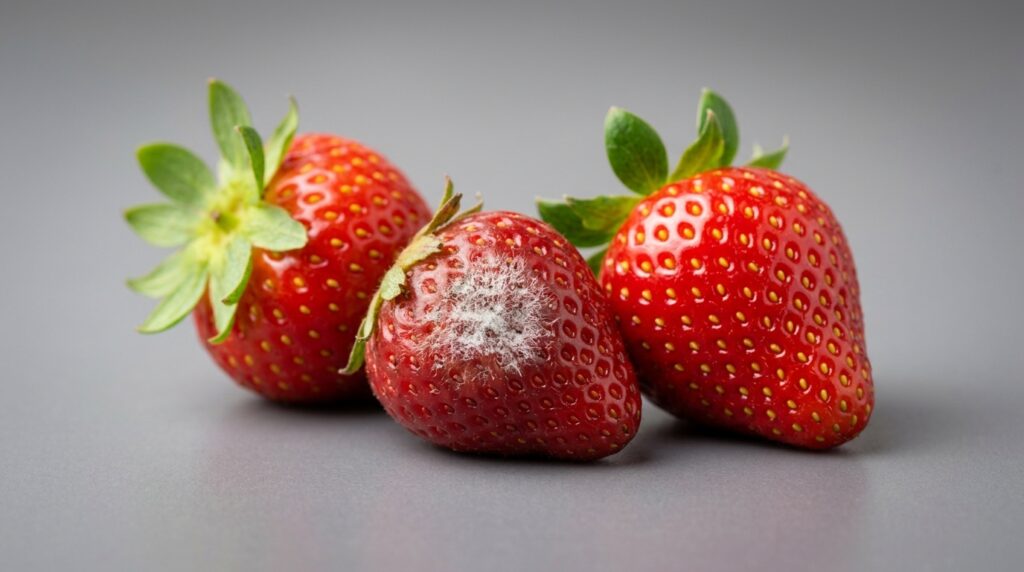
Strawberries do not ripen after they are picked, which means the fruit you buy is already at its peak the moment it leaves the field. From that point on, it is simply a race against time.
A few things work against strawberries specifically:
- Thin, porous skin. Unlike apples or oranges, strawberries have no protective peel, so moisture and bacteria move in and out easily.
- High water content. All that juiciness is delicious, but it also creates the perfect environment for mold spores to grow.
- Fast respiration. Strawberries “breathe” faster than most fruit, which speeds up the natural aging process, especially at room temperature.
- Botrytis (gray mold). This common mold spreads quickly from one soft or bruised berry to its neighbors in the same container.
Understanding these weaknesses is the first step toward beating them, and every tip in this article is built around slowing down one or more of these processes.
How to Wash Strawberries the Right Way
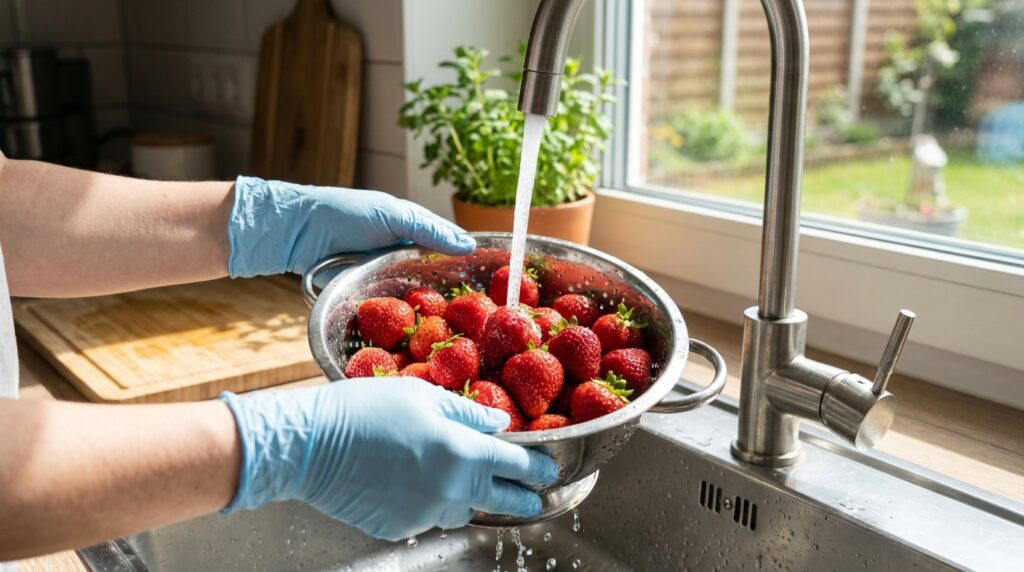
Knowing how to wash strawberries properly matters just as much as how you store them, because washing at the wrong time or in the wrong way can actually make berries spoil faster.
Follow the FDA’s guidance for cleaning fresh produce, which recommends rinsing fruit under cool, running water rather than soaking it, since soaking allows the berries to absorb extra moisture through their porous skin. A colander works well here because it lets water pass over every berry without letting them sit in a pool.
A few simple washing rules to remember:
- Rinse strawberries gently under running water, swirling them lightly by hand.
- Do not scrub or squeeze them, since bruised spots spoil first.
- Always dry them completely before putting them away.
- Skip soap or produce cleaners, since the FDA specifically advises against washing produce with soap, detergent, or commercial produce wash, because these products can be absorbed through the fruit’s skin.
How to Keep Strawberries Fresh After Washing
Once you have rinsed your berries, drying them is the step most people skip, and it is often the reason strawberries turn mushy so fast. Lay the washed berries in a single layer across a clean kitchen towel or several layers of paper towels, then gently pat the tops dry. Let them air dry for another five to ten minutes before transferring them to a storage container lined with more dry paper towels. This second layer keeps absorbing any leftover moisture while the berries sit in the fridge.
How to Keep Strawberries Fresh Longer in the Refrigerator
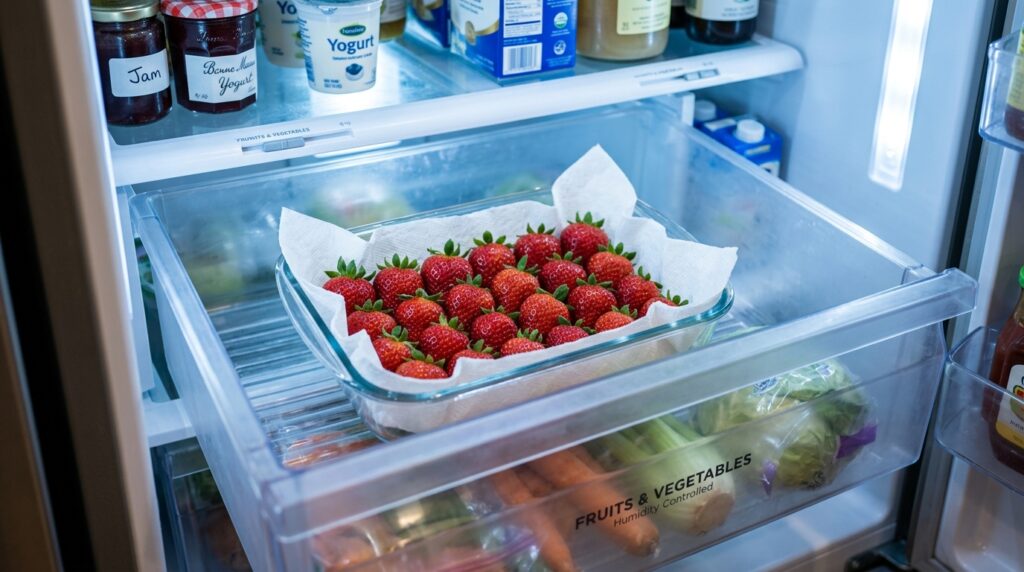
The refrigerator is where most people store their berries, and it is genuinely the best everyday option for most households. Cold temperatures slow the respiration process that causes strawberries to break down, and they also make it much harder for mold spores to multiply.
To get the most out of your fridge storage:
- Do not wash the berries until you are ready to use them, unless you plan to store them in a breathable, paper towel-lined container right away.
- Sort through the container and remove any berry that is bruised, leaking, or moldy, since one bad berry really can ruin the rest.
- Store them in a single layer whenever possible, or at most two layers, to avoid crushing the ones on the bottom.
- Keep the container in the crisper drawer, where humidity and temperature are more consistent than the rest of the fridge.
- Set your fridge temperature at or below 40°F, which lines up with the safe storage guidance in the USDA FoodKeeper tool, a free resource built by USDA, Cornell University, and the Food Marketing Institute to help households store food correctly.
Stored this way, strawberries typically stay in good shape for five to seven days, sometimes longer if the berries were very fresh to begin with.
How to Keep Strawberries Fresh in a Mason Jar
The mason jar method has become a favorite among home cooks who want a longer shelf life without much extra effort, and independent kitchen testing backs it up. In one hands-on comparison of storage methods, strawberries kept in a sealed glass jar in the fridge stayed noticeably fresher than berries left on an open tray, with far less spoilage by the end of the week.
Here is how to try it yourself:
- Choose unwashed, completely dry strawberries.
- Place them loosely in a wide-mouth glass mason jar, leaving a little room at the top.
- Screw the lid on and place the jar in the fridge.
- Open it every couple of days to check for any spoiled berries and remove them right away.
The airtight seal traps just enough humidity to keep the berries plump without letting outside air speed up decay. Just do not be surprised if you hear a small hiss when you open the jar. That is simply the natural ethylene gas the berries release as they age.
How to Keep Strawberries Fresh with Baking Soda
A baking soda soak is a popular home method used to loosen dirt and surface residue from strawberries before storage. To try it, dissolve about one teaspoon of baking soda in two cups of cool water, add the berries, swirl them gently for thirty seconds, then rinse thoroughly under running water and dry completely.
It is worth being upfront here: baking soda is mainly useful for loosening surface debris, and there is no strong published evidence that it kills mold spores or extends shelf life on its own. The step that actually matters most for freshness is the thorough drying that follows any wash, no matter which solution you use.
How to Keep Strawberries Fresh with Vinegar
The vinegar soak is one of the most talked-about tricks online, and it does have a logical basis, since vinegar is mildly acidic and can reduce surface bacteria and mold spores on the outside of the fruit. A typical ratio is one part white vinegar to three parts cold water, with the berries soaked for two to three minutes before a thorough rinse and dry.
That said, official food safety guidance takes a more cautious stance. Federal food safety guidance notes that vinegar, along with salt, pepper, and citrus juice, has not been shown to be effective at removing germs from produce, and cautions that these acidic solutions are not a substitute for washing under plain running water. If you do try a vinegar soak, always follow it with a clean water rinse so no vinegar taste or residue remains, and remember that thorough drying is what really slows down mold growth.
How to Keep Strawberries Fresh with Salt
Salt water soaks work on a similar idea to vinegar: many people believe the salt helps draw out tiny insects or debris that can hide in the seeds on the berry’s surface. To use this method, dissolve about one tablespoon of salt in four cups of cool water, soak the berries for five minutes, then rinse well under running water and dry thoroughly.
As with vinegar, salt has not been proven in food safety research to meaningfully reduce bacteria on produce, so treat it as an optional debris-loosening step rather than a true preservation method. The real freshness boost still comes from drying the berries completely and storing them cold in a breathable container.
How to Keep Strawberries Fresh Once Cut
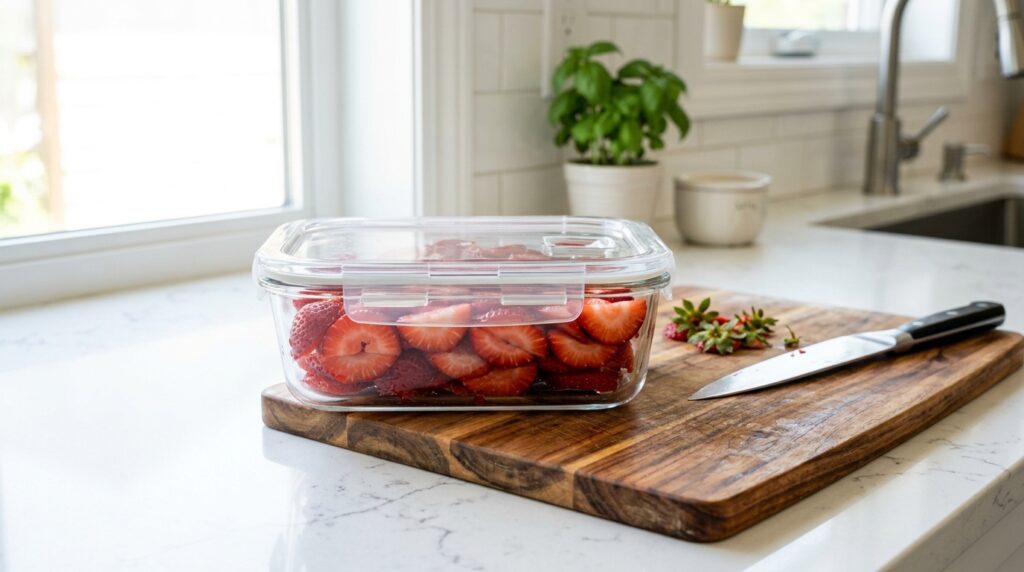
Cutting into a strawberry exposes the juicy inside to air, which speeds up spoilage dramatically compared to a whole berry. If you want to know how to keep strawberries fresh once cut, the short answer is that you are working against the clock a lot faster than with whole fruit.
- Slice only what you plan to use within a day or two.
- Store cut strawberries in an airtight container, not a loosely covered bowl.
- Keep them in the coldest part of the fridge, away from the door.
- Try to eat them within twenty-four hours for the best texture and flavor.
For how to keep strawberries fresh after cutting them for slightly longer, a squeeze of lemon juice tossed lightly over the slices can help slow browning at the cut edges, similar to how it works on sliced apples, though it will not stop spoilage entirely.
How to Keep Strawberries Fresh in a Lunch Box

Packing strawberries for school or work lunches comes with its own challenge, since the fruit often sits at room temperature for several hours before it is eaten. For how to keep strawberries fresh in lunch box settings, a little planning goes a long way.
- Use a small, rigid container instead of a flimsy bag, so the berries do not get crushed.
- Add a slim ice pack directly next to the container to keep the temperature down.
- Choose whole berries over sliced ones whenever possible, since whole fruit holds up much better outside the fridge.
- Wash and dry the berries the night before, then refrigerate them overnight so they go into the lunch box already cold.
Packed this way, strawberries generally stay in good condition for four to five hours, which comfortably covers a typical school or work day.
How to Keep Strawberries Fresh Without a Fridge
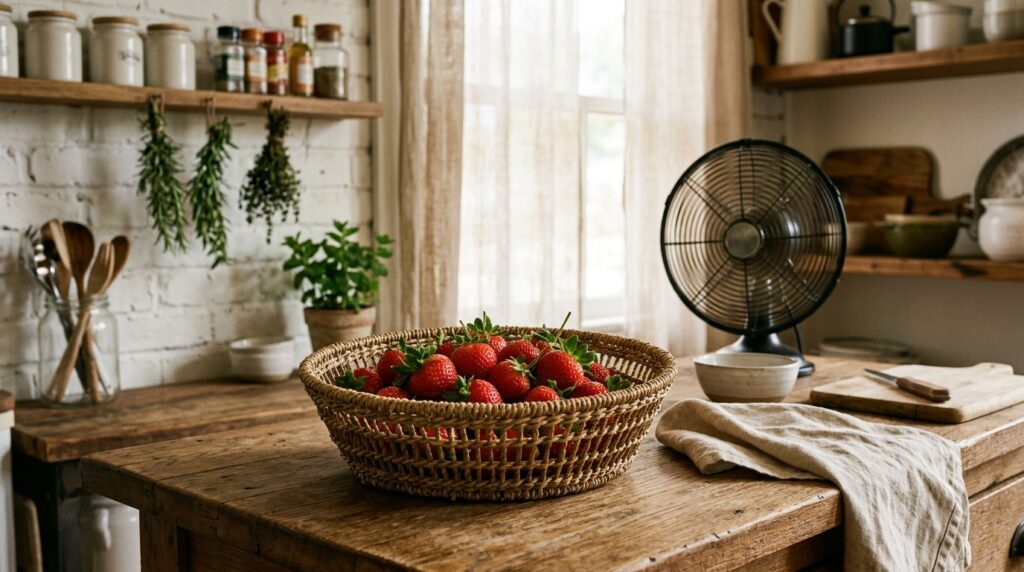
There are times when refrigeration simply is not an option, whether you are camping, dealing with a power outage, or just do not have fridge space. If you are looking into how to keep strawberries fresh without fridge access, the goal shifts from long-term storage to simply slowing decay as much as possible for a short window.
- Keep berries out of direct sunlight and away from any heat source.
- Store them in a single layer in a breathable, shaded container rather than a sealed bag.
- If possible, place the container in the coolest spot in the room, ideally somewhere below 60°F.
- Plan to eat unrefrigerated strawberries within about a day, since without cold storage they will soften and spoil far more quickly.
If you know in advance that refrigeration will not be available, a cooler with ice packs is a much better short-term solution than leaving berries out on a counter.
How Do You Keep Strawberries Fresh for 2 Weeks
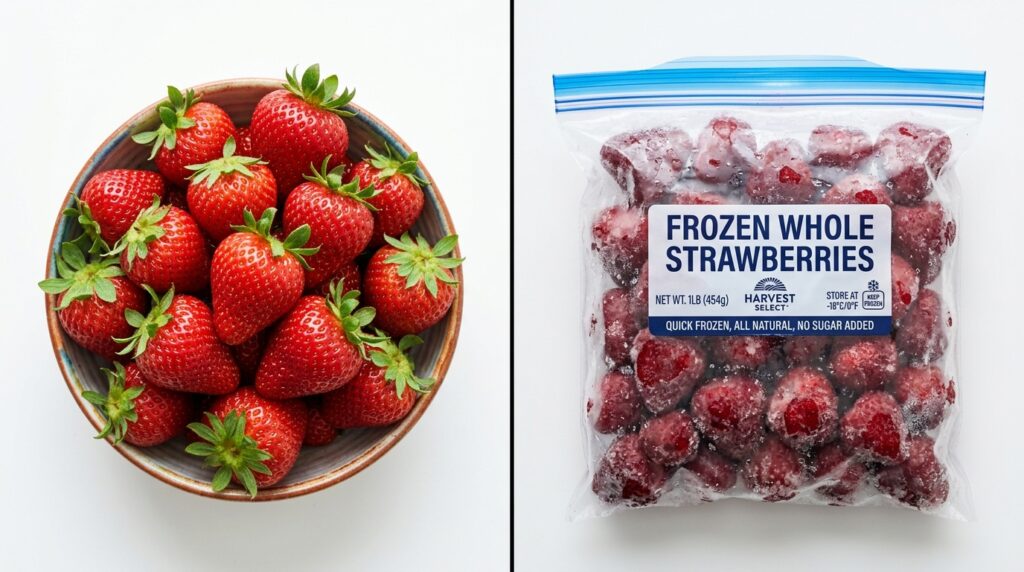
If someone asks how do you keep strawberries fresh for 2 weeks, the honest answer is that fresh, unfrozen strawberries almost never last that long, even with perfect storage. The mason jar and paper towel methods described earlier can occasionally stretch berries to ten or eleven days under ideal conditions, but freezing is the only reliable way to guarantee two weeks or more.
According to the National Center for Home Food Preservation’s guidelines for freezing strawberries, whole, sliced, or crushed berries can be frozen with or without added sugar, and properly packaged frozen strawberries stay in good condition for eight to twelve months in a freezer set to 0°F.
Basic steps for freezing:
- Wash and dry the berries completely, then remove the green caps.
- Spread them in a single layer on a parchment-lined baking sheet.
- Freeze for one to two hours until solid, which prevents the berries from clumping together.
- Transfer the frozen berries into freezer bags or airtight containers, pressing out as much air as possible.
- Label the bag with the date and use within the recommended storage window.
For extra guidance on packing and syrup options, Penn State Extension’s freezing instructions walk through both sugar-pack and syrup-pack methods, which can help preserve texture and color even better for baking or smoothies later on.
How to Keep Strawberries Fresh for a Week
Combining several of the tips above is really how to keep strawberries fresh for a week without much fuss. Here is a simple routine that pulls the best parts of each method together:
- Sort the berries as soon as you get home and remove any that are already soft or bruised.
- Skip washing until you are ready to eat or cook with them, unless using the mason jar or paper towel method.
- Store unwashed berries in their original ventilated container, or transfer them to a paper towel-lined container with a loose-fitting lid.
- Keep the fridge at or below 40°F, and place the container in the crisper drawer.
- Check the berries every one to two days and remove any new spoilage immediately, since mold spreads fast between berries that are touching.
Following this routine consistently is often described online as the trick for how to keep strawberries fresh longer in the fridge, and it really is less about one single hack and more about stacking several small habits together.
How to Keep Strawberries Fresh the Longest: Method Comparison
Different situations call for different approaches, so here is a side-by-side look at how each storage method compares.
| Method | Typical Shelf Life | Best For | Effort Level |
|---|---|---|---|
| Original clamshell in fridge | 3–5 days | Quick, everyday use | Very low |
| Paper towel-lined container | 5–7 days | Weekly grocery trips | Low |
| Mason jar (unwashed, sealed) | 7–10 days | Longer fridge storage | Low |
| Vinegar or salt soak + dry storage | 5–8 days | Reducing surface debris before storing | Medium |
| Freezing | 8–12 months | Smoothies, baking, long-term use | Medium |
| Room temperature, no fridge | 12–24 hours | Camping, outages, short trips | Low |
Pros and Cons of the Most Popular Methods
Mason Jar Storage
- Pros: Simple, reusable, keeps berries visibly fresh, tested to outperform loose storage.
- Cons: Only holds a limited quantity, and berries near the bottom can bruise under the weight of the others.
Vinegar or Salt Soak
- Pros: Easy to do, removes visible dirt and debris, satisfying extra step for many home cooks.
- Cons: Not proven by food safety agencies to significantly reduce bacteria, and requires a thorough rinse afterward.
Freezing
- Pros: By far the longest storage option, ideal for smoothies, jams, and baked goods.
- Cons: Changes the texture, so frozen berries are not ideal for eating fresh or using in salads.
Expert Tips for Extending Strawberry Freshness
- Buy strawberries that are fully red with fresh, green caps still attached, since these tend to last longer than berries that are already turning dull.
- Avoid rinsing the whole carton right when you get home unless you are using a method built around washing, like the vinegar or baking soda soak.
- Keep strawberries away from ethylene-producing fruits like bananas and apples in the fridge, since ethylene gas speeds up ripening and decay.
- Store strawberries away from strong-smelling foods, since their porous skin can absorb odors.
- Rotate older berries to the front of the fridge so they get used first, following a simple first-in, first-out habit.
Frequently Asked Questions
How long do strawberries actually last in the fridge?
Most fresh strawberries stay good for three to seven days in the refrigerator, depending on how ripe they were when purchased and how they are stored. Using a paper towel-lined container or a sealed mason jar tends to push that window closer to seven to ten days.
Can I wash strawberries before storing them?
It is generally better to wash strawberries right before eating them rather than immediately after buying them, since extra moisture speeds up mold growth. If you do wash them ahead of time, make sure they are completely dry and stored in a breathable, paper towel-lined container.
Is it safe to eat strawberries with one moldy berry in the container?
It is best to remove and discard any strawberries that were touching a moldy one, since mold spores can spread invisibly to nearby fruit even if it looks fine on the surface.
Do strawberries last longer whole or sliced?
Whole strawberries last significantly longer than sliced ones, since cutting exposes the inner flesh to air and speeds up spoilage. Sliced strawberries are best eaten within a day.
What is the best container for storing strawberries in the fridge?
A shallow, breathable container lined with paper towels, or a sealed glass jar for unwashed berries, both work well. Avoid tightly sealed plastic bags, since trapped moisture encourages mold.
Conclusion
Keeping strawberries fresh really comes down to a handful of habits: sort them early, avoid unnecessary moisture, store them cold, and give them room to breathe. Whether you stick with a simple paper towel-lined container, try the mason jar trick, or freeze a batch for smoothies down the road, small adjustments can easily double the amount of time your berries stay good. Try one or two of these methods on your next carton of strawberries and see how much less you end up throwing away.