

Money has worked the same way for generations. You put your paycheck in a bank, the bank decides your interest rate, and if you want a loan, you wait for someone to approve it. That entire chain of middlemen is exactly what decentralized finance is trying to change.
Decentralized finance, often shortened to DeFi, is a growing corner of the financial world built on blockchain technology. Instead of banks or brokers controlling your money, software programs called smart contracts handle the transactions directly between users. This guide breaks down what that actually means, how it stacks up against the traditional banking system, and what beginners should know before trying it.
What Does Decentralized Finance Actually Mean?
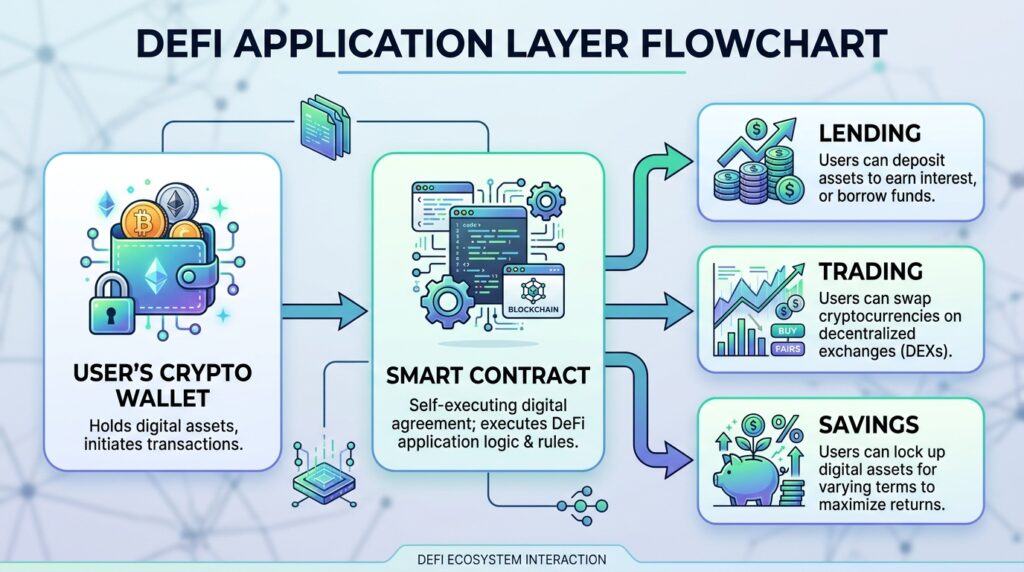
At its core, decentralized finance refers to financial services like lending, borrowing, trading, and saving that run on blockchain networks instead of through banks or financial companies. There is no head office, no loan officer, and no single company holding your funds.
Most DeFi activity happens on the Ethereum blockchain, though other networks support it too. Users interact with these systems through applications commonly called dApps, short for decentralized applications.
The idea first started gaining traction around 2018 when developers began building open source financial tools that anyone with an internet connection could use. Since then it has grown into a multi billion dollar ecosystem covering everything from savings accounts to insurance.
How Is This Different From Just Using Crypto?
Owning Bitcoin or Ethereum is not the same as using DeFi. Simply holding crypto is like holding cash under your mattress. DeFi is what happens when that crypto gets put to work through lending platforms, trading protocols, or interest earning accounts, all without a bank in the middle.
How Does Decentralized Finance Work?
DeFi relies on a few key building blocks working together. Understanding these pieces makes the whole system much less confusing.
Smart Contracts
A smart contract is simply a piece of code stored on a blockchain that automatically executes when certain conditions are met. Think of it as a vending machine. You put in the right amount, and the machine automatically gives you the product. No cashier needed.
In DeFi, smart contracts replace the loan officer, the stockbroker, and the insurance adjuster. They enforce the rules of a transaction without a human being involved.
Blockchain Networks
The blockchain acts as the public record keeper. Every transaction is logged on a shared ledger that thousands of computers around the world maintain together. This is what makes the system decentralized rather than controlled by one company’s private servers.
Digital Wallets
To use DeFi, you need a digital wallet such as MetaMask or a hardware wallet. This wallet holds your private keys, which are essentially the password that proves the funds are yours. There is no customer service line to call if you lose them, so security matters a lot here.
Decentralized Exchanges
Instead of a stock exchange with a trading floor, DeFi uses decentralized exchanges, often called DEXs. These let people trade cryptocurrencies directly with each other using automated pricing formulas rather than a traditional order book run by a company.
Decentralized Finance vs Centralized Finance: The Core Difference
This is where most beginners get confused, so let’s slow down. Centralized finance, sometimes called CeFi, is the system we already know: banks, credit unions, brokerages, and even centralized crypto exchanges like Coinbase’s trading platform. A company or institution sits in the middle of every transaction.
Comparing decentralized finance vs centralized finance really comes down to one question: who is in control of your money and the rules around it?
In a centralized system, a company approves your account, sets your interest rate, and can freeze your funds if they suspect fraud or if you break their terms. In a decentralized system, code enforces the rules equally for everyone, and no single company can freeze your wallet.
Side by Side Comparison
| Feature | Decentralized Finance (DeFi) | Centralized Finance (CeFi) |
|---|---|---|
| Who controls funds | The user, through a private wallet | A bank, broker, or exchange |
| Access requirements | Just an internet connection and a wallet | Identity verification, credit checks, approval |
| Transparency | All transactions visible on public blockchain | Internal records not publicly visible |
| Speed | Often near instant, 24/7 | Limited to business hours, can take days |
| Customer support | Usually community forums, no formal support | Dedicated support teams |
| Regulatory protection | Little to none in most cases | FDIC or SIPC insured in many cases |
| Reversibility | Transactions are generally final | Disputes can sometimes be reversed |
According to the Consumer Financial Protection Bureau’s mission style oversight that applies to traditional banks, centralized institutions are required to follow strict consumer protection rules. DeFi platforms are not held to the same standard, which is one of the biggest tradeoffs to understand.
Why People Choose One Over the Other
Some people prefer centralized finance because of the safety net. If your bank account gets hacked, there are legal protections and support teams to help. DeFi does not offer that same cushion, but it offers something else: direct control and fewer barriers to entry.
Someone without a bank account, or someone living somewhere with limited banking access, can open a DeFi wallet in minutes with no paperwork. That kind of access is part of why interest in decentralized finance keeps growing despite the risks.
Common Uses of Decentralized Finance
DeFi is not just one thing. It covers a whole range of financial activities that mirror what banks already offer, just structured differently.
Lending and Borrowing
Platforms let users lend out their crypto to earn interest, or borrow against crypto they already hold as collateral. There is no credit check because the loan is secured by digital assets rather than your credit history.
Decentralized Trading
Instead of placing an order through a brokerage, users swap tokens directly through decentralized exchanges using automated market maker systems that set prices based on supply and demand within a liquidity pool.
Stablecoins
Stablecoins are cryptocurrencies designed to hold a steady value, usually pegged to the US dollar. They act as a bridge between volatile crypto markets and everyday spending, and they are a foundational piece of most DeFi activity.
Yield Farming and Staking
Users can lock up their crypto in a protocol to help it function, and in return they earn rewards. This is often called staking or yield farming, and it works a bit like earning interest in a savings account, though with considerably more risk.
Decentralized Insurance
A newer category lets users pool funds together to cover each other against losses from hacks or smart contract failures, similar to how a mutual insurance group works.
Benefits of Decentralized Finance
There are real reasons DeFi has attracted so much attention, even with its rough edges.
- Open access. Anyone with an internet connection can use it, regardless of location or income level.
- No middleman fees. Removing banks and brokers from the equation often lowers transaction costs.
- Full transparency. Every transaction is recorded on a public ledger that anyone can review.
- User control. You hold your own funds instead of trusting a third party to hold them for you.
- Around the clock access. DeFi platforms do not close for holidays or weekends.
According to Corporate Finance Institute’s overview of the space, this open structure is designed to give people more direct control over their financial decisions than traditional institutions typically allow.
Risks and Downsides of Decentralized Finance
It would not be honest to only talk about the upside. DeFi has real risks that beginners especially need to take seriously.
Smart Contract Bugs
Code is written by humans, and humans make mistakes. A flaw in a smart contract can be exploited by hackers, sometimes draining millions of dollars from a protocol in minutes.
No Safety Net
Traditional bank deposits are insured up to a certain amount. DeFi funds are not. If something goes wrong, there is generally no institution to file a complaint with or recover your money from.
Price Volatility
Cryptocurrency prices swing dramatically. Collateral used to secure a DeFi loan can lose value quickly, sometimes triggering automatic liquidations.
Complexity
The learning curve is steep. Wallets, gas fees, seed phrases, and slippage are all new concepts for most beginners, and mistakes can be costly and permanent.
Regulatory Uncertainty
The SEC’s Office of Investor Education has repeatedly warned that crypto asset platforms, including many DeFi services, may not carry the same investor protections found in registered securities markets. Rules around this space are still being written, and they can shift with little warning.
Pros and Cons Summary
Pros
- Full control over your own assets
- Lower barriers to entry
- Transparent, publicly viewable transactions
- Potentially higher yields than traditional savings
Cons
- No deposit insurance or dispute resolution
- Vulnerable to hacks and coding errors
- Requires technical understanding to use safely
- Regulatory landscape still developing
How Beginners Can Get Started Safely
If you are curious about trying DeFi, moving slowly is the smartest approach.
- Start with education, not money. Spend time reading about how wallets and smart contracts work before putting in real funds.
- Set up a reputable wallet. Choose a well known wallet provider and write down your recovery phrase somewhere safe and offline.
- Start small. Only use an amount you would be comfortable losing entirely while you learn the ropes.
- Research the protocol. Look into how long a platform has existed, whether it has been audited, and what the community says about it.
- Double check every transaction. DeFi transactions cannot usually be reversed, so confirm addresses and amounts carefully before confirming.
As the Motley Fool’s guide to DeFi points out, the newness of this technology means unexpected problems can and do happen, so caution is genuinely warranted, not just a formality.
Expert Tips for Navigating Decentralized Finance
- Never share your seed phrase. No legitimate platform will ever ask for it. If someone requests it, that is a scam.
- Watch out for unrealistic returns. If a platform promises extremely high guaranteed yields, treat it as a major red flag.
- Use hardware wallets for larger amounts. Keeping significant funds on a device disconnected from the internet reduces hacking risk.
- Follow gas fees closely. Transaction costs on busy networks can spike, so timing your activity can save money.
- Diversify across platforms. Avoid putting all your funds into a single protocol, since even established platforms can face unexpected issues.
According to Gemini’s Cryptopedia resource on DeFi trends, users retain a high degree of control over their funds in real time, which is powerful but also means the responsibility for safety falls entirely on the individual.
Is Decentralized Finance Right for You?
There is no single right answer here. It depends on your comfort with risk, your technical confidence, and what you are hoping to get out of it.
If you value convenience, insurance protections, and customer support, traditional centralized finance will likely feel more comfortable. If you are drawn to more direct control, transparency, and are willing to accept the tradeoffs, decentralized finance offers a genuinely different way to manage money.
Many people end up using both. A traditional bank account for everyday spending and bills, paired with a small, carefully managed DeFi allocation for learning and experimentation, is a common and reasonable middle ground.
As Fidelity’s learning center explains it, DeFi is still new, and while it is vulnerable to bugs and price swings, it also represents a genuinely different financial framework worth understanding even if you decide not to use it heavily.
Frequently Asked Questions
Is decentralized finance safe for beginners?
DeFi carries more risk than traditional banking because there is no deposit insurance and mistakes are often permanent. Beginners can use it more safely by starting with small amounts, sticking to well established platforms, and taking time to understand how wallets and transactions work before committing significant funds.
What is the main difference between DeFi and CeFi?
The main difference in decentralized finance vs centralized finance comes down to control. DeFi relies on smart contracts and blockchain networks so users manage their own funds directly, while CeFi relies on banks, brokers, or exchanges that hold and manage funds on a user’s behalf.
Do I need to own cryptocurrency to use DeFi?
Yes, generally you need some cryptocurrency, usually Ethereum or a stablecoin, to interact with DeFi platforms. You will also need a digital wallet to hold that crypto and connect to decentralized applications.
Can I lose money using decentralized finance?
Yes, and it can happen quickly. Risks include smart contract bugs, hacking incidents, sudden price drops in collateral, and simple user errors like sending funds to the wrong address. There is typically no way to reverse a completed blockchain transaction.
Is decentralized finance legal?
In most places, using DeFi platforms is legal, though the regulatory environment is still evolving. Regulators continue to examine how existing financial rules apply to decentralized platforms, so it is worth staying updated on guidance from official sources in your area.
Final Thoughts
Decentralized finance is reshaping how people think about money, but it is not a replacement for careful decision making. It offers real advantages like transparency, open access, and direct control, alongside real risks like volatility and limited consumer protections.
The best approach for most beginners is simple: learn first, start small, and never risk more than you can afford to lose. Whether decentralized finance becomes a small part of your financial life or something you explore more deeply, understanding the fundamentals now will help you make better decisions later.
If you found this guide helpful, consider bookmarking it and revisiting the comparison table next time you are weighing a DeFi platform against a traditional banking option.
Disclaimer: This content is for informational purposes only and does not constitute financial, investment, or legal advice. Decentralized finance involves significant risk, including the potential loss of funds. Always conduct your own research and consult a qualified financial professional before making financial decisions.