
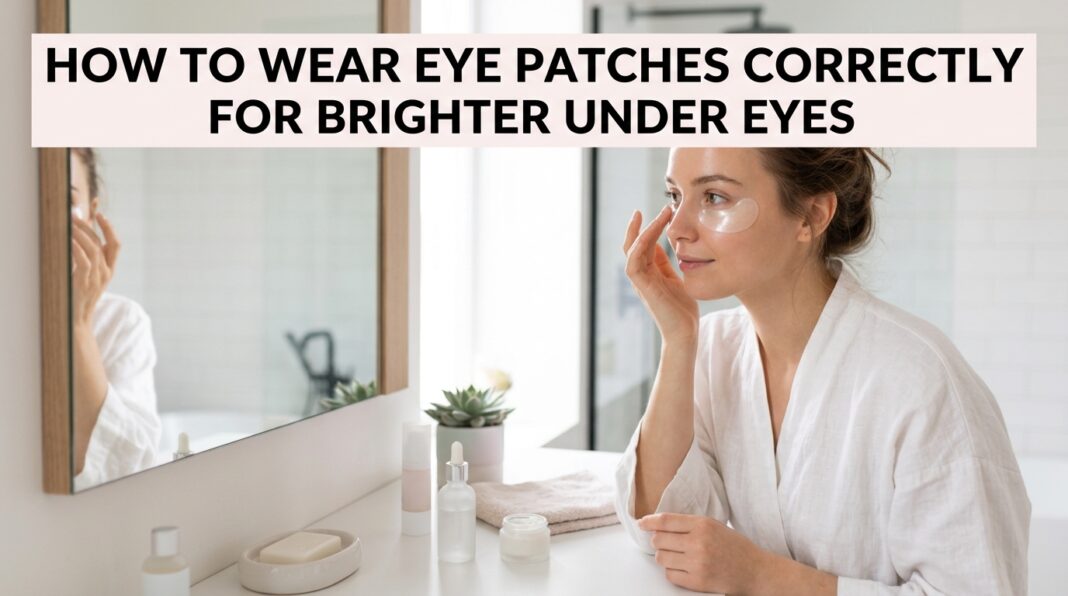
Most people rip open an eye patch, slap it under their eyes, and scroll their phone for ten minutes. That’s not wrong, exactly, but it’s not getting you the full benefit either. If you want to actually understand how to wear eye patches so they do something for your skin instead of just feeling cold and pleasant, a few small adjustments make a real difference.
The area under your eyes is thinner and more reactive than the rest of your face, so how you prep it, place the patch, and remove it all affects the outcome. Here’s the breakdown, without the fluff.
What Under-Eye Patches Actually Do
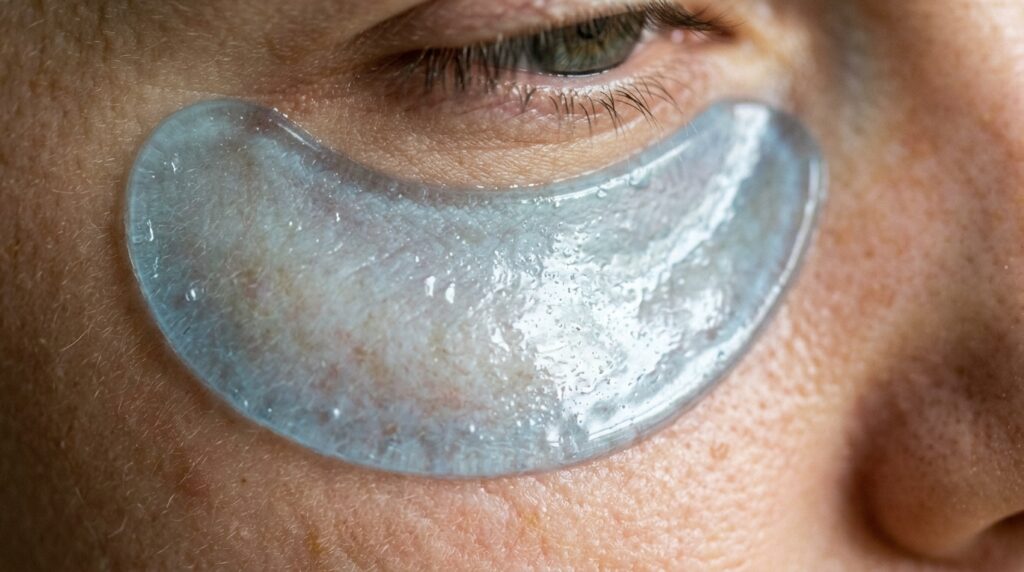
Under-eye patches are small, curved pads, usually made of hydrogel, that sit against the skin and deliver a concentrated dose of serum. Dermatologists note that how eye patches work comes down to their occlusive nature, which forces active ingredients like caffeine, hyaluronic acid, and peptides to absorb faster than they would from a regular cream.
The results are short-term but noticeable: less puffiness, a temporary brightening effect, and smoother-looking skin. They’re not a replacement for a full skincare routine, but they’re a solid quick fix before an event, a long workday, or a video call after a rough night’s sleep.
How to Wear Eye Patches Correctly, Step by Step

Understanding how to wear eye patches correctly matters more than the product you buy. Even a high-quality patch won’t do much if the basics are off.
Prep Your Skin First
Skip this step and the patch won’t stick properly, or it’ll slide around and lose contact with the skin. Start with a clean, dry face. Cleanse the eye area to remove makeup, sunscreen, or oil, since patches absorb best on skin that’s freshly cleansed and dry.
If your routine includes a toner or light essence, apply it before the patch rather than after. It preps the skin so the patch’s serum has something to work with instead of sitting on a dry, closed-off surface.
Positioning the Patch
This is where most people go wrong. Learning to correctly position an eye patch under the eye starts with lining the bottom edge up against your lash line, then smoothing outward. Many patches are shaped with a wider end and a narrower end, and the direction you place them changes what they target.
Leave a small gap below your lash line. Getting the patch too close increases the chance of the serum migrating into your eyes, which can cause stinging or irritation.
How Long to Leave Them On
Fifteen to twenty minutes is the sweet spot for most patches. One skincare brand’s application guide points out that most patches are formulated to work within a 15 to 30 minute window, and leaving them on longer can actually pull moisture back out of the skin instead of adding to it. If a patch starts drying out or curling at the edges before your timer’s up, that’s your cue to take it off early.
What to Do After You Remove Them
Don’t rinse your face right after. Instead, gently pat any leftover serum into your skin with clean fingers, this helps you get the most out of the product instead of washing it down the drain. Some people like to move the used patches up to the eyelids for a few extra minutes to firm that area too, since there’s usually still active serum left in the gel.
Follow up with a light moisturizer or eye cream if your skin still feels like it needs it, though many patches are hydrating enough on their own.
How to Wear Eye Patches Under Eye for Best Placement
Placement really is a science, even if it feels like a small detail. If your main concern is fine lines and crow’s feet, the wider portion of the patch should angle toward the outer corner, where those lines tend to form. Getting how to wear eye patches under eye placement right for dark circles or shadowing near the nose bridge means the narrower end should sit closer to that inner corner instead.
A few placement habits worth building:
- Use clean hands or the spatula that comes with the product, not your nails, to avoid tearing the gel
- Smooth the patch outward from the center so there are no air bubbles trapped underneath
- Press gently along the edges so the patch makes full contact with the skin
- Avoid stretching the patch to fit, since this can cause it to peel up faster
Good contact matters more than most people realize. A patch that’s only half-stuck to your skin is basically just sitting there doing nothing for the parts that aren’t touching.
How to Wear Eye Patches for Dark Circles
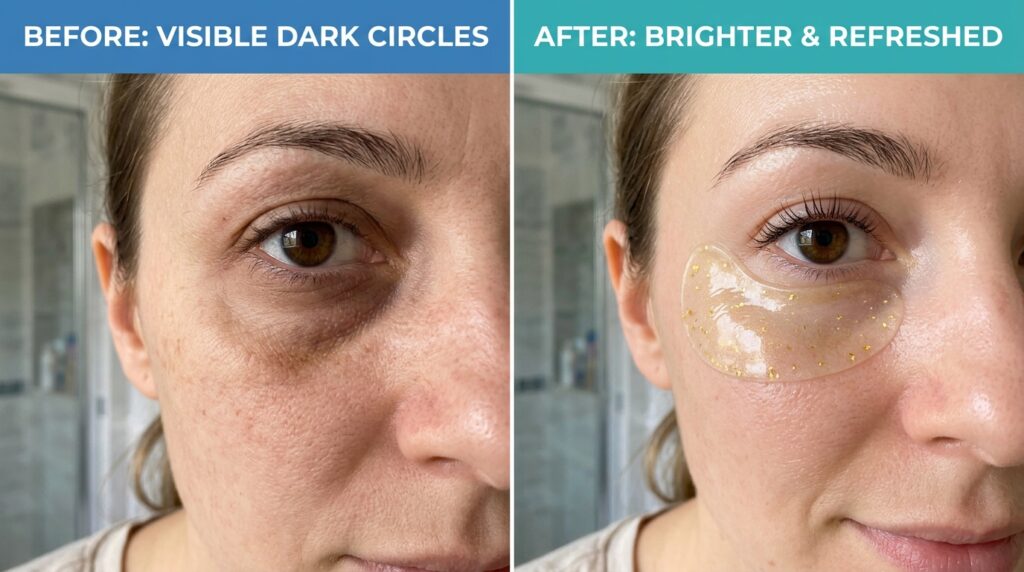
Dark circles aren’t one single thing, which is why patches work better for some people than others. Dermatologists explain that learning how to wear eye patches for dark circles starts with understanding that the most common cause is either visible blood vessels showing through thin skin or excess pigment building up in that area.
What Causes Dark Circles in the First Place
A mix of factors usually plays into it, including genetics and lifestyle habits like poor sleep, dehydration, and heavy tobacco or alcohol use. As skin ages, it naturally loses collagen and becomes thinner, which is why dark circles under the eyes tend to become more noticeable over time as the blood vessels underneath show through more clearly.
For some people, the pigment itself is the issue rather than visible blood vessels. This kind of post-inflammatory pigmentation can develop after rubbing or scratching the eyes, or simply build up gradually with age and sun exposure. Patches won’t fix structural shadowing the way they can help with pigment or puffiness, so it’s worth knowing which type you’re dealing with before you expect dramatic results.
Ingredients That Target Pigmentation
If pigmentation is your main concern, look for patches with:
| Ingredient | What It Helps With |
|---|---|
| Vitamin C | Brightening and evening out tone |
| Niacinamide | Reducing the appearance of pigmentation |
| Caffeine | Constricting blood vessels to reduce puffiness |
| Hyaluronic acid | Deep hydration for thin, dry under-eye skin |
| Green tea extract | Soothing and calming irritated skin |
None of these ingredients erase dark circles permanently, they just temporarily improve how the skin looks and feels. If you’d rather try home remedies for dark circles alongside patches, a cold compress or chilled cucumber slices can offer a similar short-term depuffing effect. If your circles are persistent and don’t respond to lifestyle changes or topical products, it’s worth checking in with a dermatologist.
How Often Should You Use Them
More isn’t better here. Overusing patches can actually leave the skin feeling drier if you’re not following up with proper hydration. A reasonable starting point is twice a week for the first couple of weeks, then dialing back to once a week for maintenance.
If you have sensitive or reactive skin, start with once a week and watch how your skin responds before increasing frequency. People with very dry under-eye skin sometimes find that alternating between different types of eye masks, depending on how their skin looks that day, works better than a rigid schedule.
Common Mistakes People Make
A few habits quietly cancel out the benefits of a good patch:
- Leaving them on too long. Beyond 30 minutes, the gel starts to dry and can reverse the hydration effect
- Applying to dirty or oily skin. The patch won’t adhere properly and the serum won’t absorb evenly
- Rinsing immediately after removal. This washes away leftover active ingredients that could still be absorbing
- Using them daily. This can overwork sensitive skin instead of helping it
- Ignoring expiration dates. Serum-soaked patches degrade over time, especially once the packaging has been opened
Small fixes, but they add up to a noticeably better result.
Expert Tips for Better Results
- Store patches in the fridge before use; the cold temperature adds an extra depuffing effect targeting puffiness and ingredients like caffeine that work to constrict blood vessels
- Apply patches before makeup, never after, so you’re not disturbing your foundation or concealer
- If you wear glasses, take them off during application so the patch has time to set without pressure on one side
- Pair patches with a cold jade roller or gua sha tool afterward to help boost circulation in the area
- Don’t skip sunscreen the next morning; UV exposure is one of the biggest drivers of pigmentation-related dark circles over time
Pros and Cons of Under-Eye Patches
| Pros | Cons |
|---|---|
| Fast, visible depuffing effect | Results are temporary, not permanent |
| Easy to use with no special skill needed | Can be pricier per use than a standard eye cream |
| Great for pre-event quick fixes | Won’t fix structural or deep-set dark circles |
| Wide range of ingredient options for different concerns | Overuse can dry out delicate skin |
| Doubles as a relaxing self-care moment | Not a substitute for sleep, hydration, or sun protection |
Frequently Asked Questions
Do eye patches really work for dark circles?
They can temporarily improve the appearance of puffiness and mild pigmentation, especially with ingredients like caffeine and vitamin C. They won’t permanently remove dark circles, particularly if the cause is structural or genetic rather than surface-level.
How long should I leave eye patches on?
Most patches work best within 15 to 30 minutes. Leaving them on longer doesn’t add extra benefit and can actually dry out the skin instead.
Can I use eye patches every day?
It’s not recommended for most skin types. Two to three times a week is a safer starting frequency, with sensitive skin types sticking closer to once a week.
Should I apply eye patches before or after moisturizer?
Apply them to clean, dry skin before your regular moisturizer or eye cream. Applying a heavy cream first can create a barrier that stops the patch’s serum from absorbing properly.
What’s the right way to position the patch for dark circles?
Angle the narrower end of the patch toward the inner corner of the eye, closer to the nose, where pigmentation and shadowing are usually most visible, and let the wider end extend toward the outer corner.
Final Thoughts
Wearing eye patches correctly comes down to a handful of habits: clean skin, the right placement, a reasonable amount of time on your face, and a little patience about what they can and can’t fix. Used consistently and correctly, they’re a genuinely useful tool for looking more rested without much effort. Used carelessly, they’re just a cold, damp distraction for twenty minutes.
If dark circles or puffiness are a persistent, ongoing concern rather than an occasional annoyance, patches are a good supporting habit, not a full solution. Pair them with decent sleep, hydration, and sun protection, and they’ll do a lot more for you.
Try building one or two patch sessions into your week this month and see how your under-eye area responds before adjusting frequency.
This content is for informational purposes only and is not intended as medical or dermatological advice. If you have persistent or severe dark circles, skin irritation, or an underlying health concern, consult a licensed dermatologist or healthcare provider.