
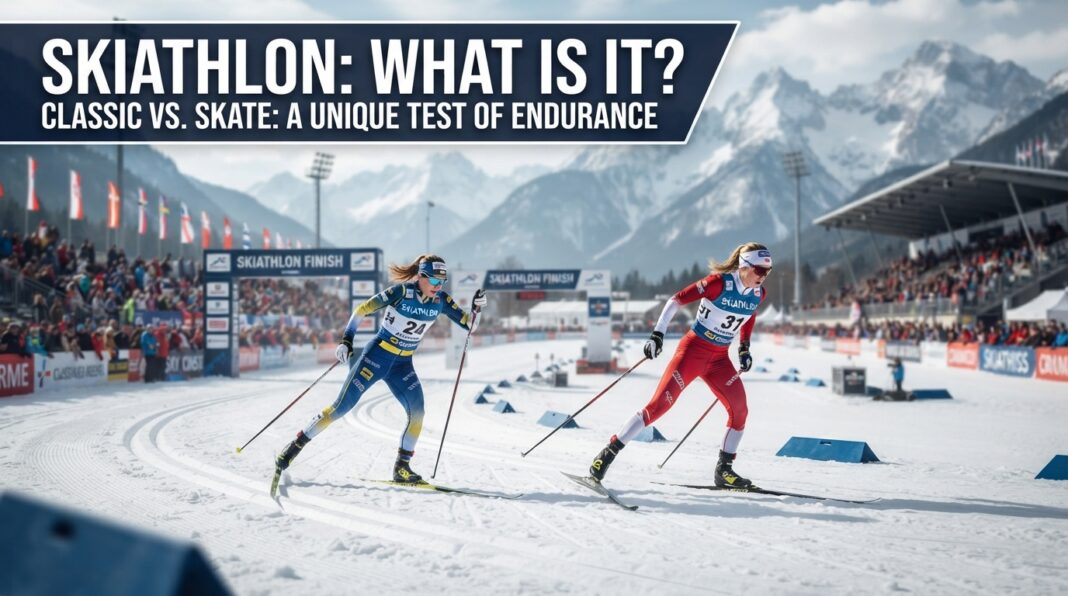
Every four years, casual sports fans tune into the Winter Olympics and hear commentators shouting about a “skiathlon,” and most people have no idea what they’re watching. So skiathlon, what is it, really? In short, it’s a single cross-country ski race where athletes ski half the distance with one technique, swap equipment mid-course, and finish the second half with a completely different technique.
That switch is what makes it one of the most physically demanding and strategically interesting events on the Nordic skiing calendar. It rewards versatility over raw specialization, which is part of why it’s become a fan favorite at recent Winter Games.
This piece walks through how the race is structured, where it came from, how it compares to other cross-country formats, and what to watch for if you’re tuning in for the first time.
What Is a Skiathlon?
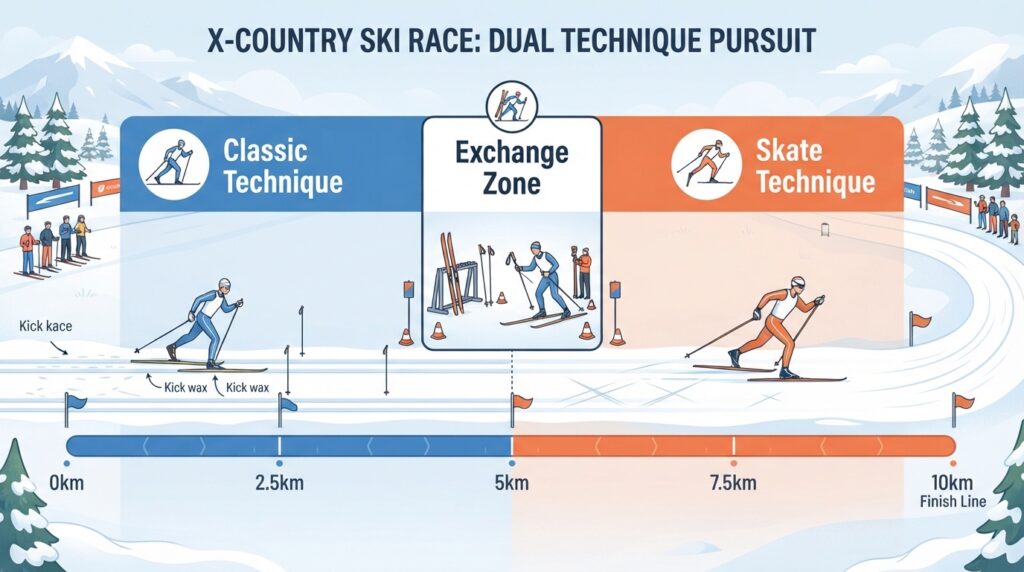
A skiathlon is a mass-start cross-country skiing race that combines two different skiing techniques into one continuous event. Skiers begin using the classic technique, the traditional forward-striding motion most people picture when they think of cross-country skiing.
Halfway through the race, competitors pass through a designated exchange zone, swap their classic skis and poles for a shorter, stiffer pair built for skate skiing, and finish the remaining distance using the free (skate) technique.
There are no separate heats and no averaged times. Whoever crosses the finish line first wins, which keeps the race tactically simple to follow even for a first-time viewer.
How the Skiathlon Race Actually Works
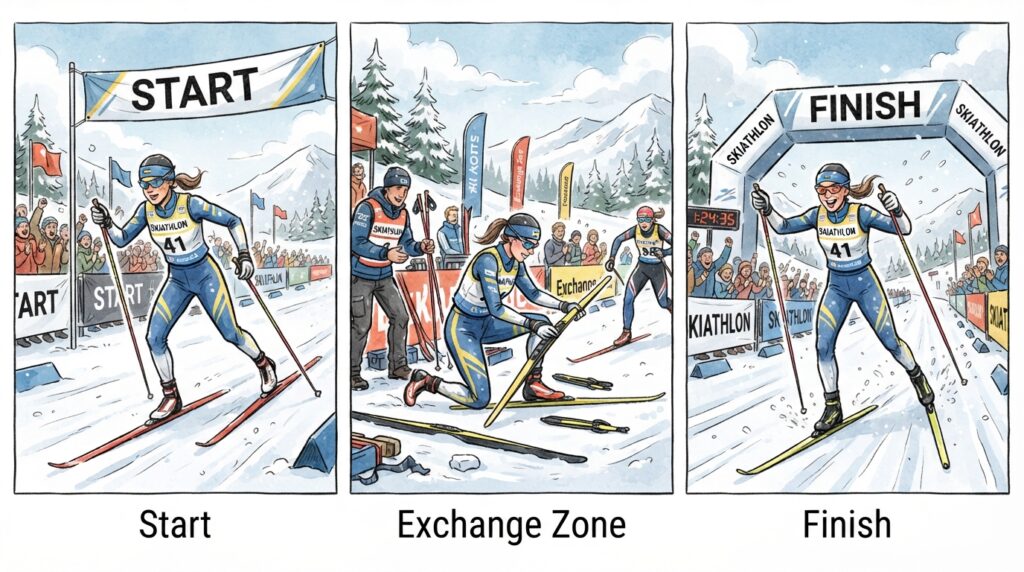
The format sounds complicated on paper, but once you break it into three parts, it’s easy to follow.
The Mass Start
Every skier in the field lines up together and starts at the exact same moment, unlike some cross-country events that use staggered interval starts. This creates a crowded, physical opening stretch as athletes jostle for position on the track.
The Classic Half
For the first portion of the race, skiers are restricted to classic technique movements such as the diagonal stride and double poling. No skating motions are allowed during this segment.
The Equipment Swap and Skate Half
At the midpoint, athletes reach a changeover zone where a second pair of skis and poles is already waiting for them. They quickly step out of their classic gear, clip into skate skis, and finish the race using the faster skating motion. According to the format used in recent Olympic cross-country skiing competitions, this transition can genuinely decide medals, since a fumbled ski change can cost several seconds in a race that’s often won by a photo finish.
Skiathlon Distances Explained
Distances vary slightly by competition level and gender, but the Olympic format is the most commonly referenced version. Skiers cover 20 kilometers total, split evenly between the two techniques.
| Category | Classic Segment | Skate Segment | Total Distance |
|---|---|---|---|
| Men (Olympic) | 10 km | 10 km | 20 km |
| Women (Olympic) | 10 km | 10 km | 20 km |
| Junior/Regional events | 5-7.5 km | 5-7.5 km | 10-15 km |
For the 2026 Winter Games, men and women race identical 20-kilometer distances for the first time in Olympic history, a shift from earlier years when men’s races were often longer than women’s.
A Brief History of the Skiathlon
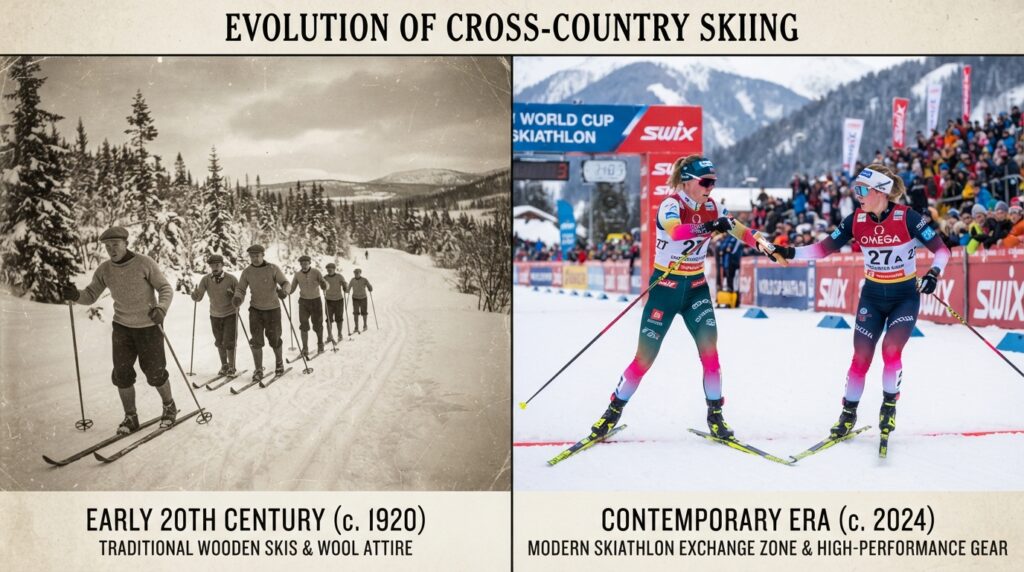
The skiathlon didn’t start out with that name. The combined-technique format actually dates back to pursuit-style races that have roots in the earliest Winter Olympics, though the modern two-part structure took shape much more recently.
In the early 2000s, the event was raced as two separate pursuit competitions held on different days, with the finishing gap from the first race carried over as a head start in the second. That two-day version was folded into a single same-day race, and the combined format was formally introduced as a unified event in 2003 at the World Championships.
The International Ski and Snowboard Federation later renamed the race “skiathlon” to separate it clearly from Nordic combined, a different sport that pairs ski jumping with cross-country skiing. Since that renaming, the event has settled into its current single-race, mid-course equipment swap structure.
Skiathlon vs Other Cross-Country Skiing Events
Cross-country programs at major competitions include several formats, and it helps to see how skiathlon stacks up against the others.
| Event | Technique Used | Start Type | Approx. Distance |
|---|---|---|---|
| Skiathlon | Classic then skate | Mass start | 20 km |
| Individual sprint | Classic or skate only | Heats/knockout | ~1.4-1.6 km |
| 10 km individual | Skate only | Interval start | 10 km |
| 50 km mass start | Classic only | Mass start | 50 km |
| 4×7.5 km relay | Mixed by leg | Mass/leg start | 30 km team total |
The relay and team sprint formats also involve technique changes, but only between teammates rather than mid-race for a single athlete, which is what sets skiathlon apart. It’s the only individual race where one competitor has to master both techniques inside the same event.
Equipment Skiers Use in a Skiathlon
Because the race demands two techniques, athletes need two full setups ready to go.
- Classic skis: Longer, narrower skis with grip wax or texture under the foot for traction while striding forward.
- Skate skis: Shorter and stiffer, built for a side-to-side pushing motion rather than a straight-line glide.
- Boots: Many racers use a hybrid “combi” or pursuit boot with a flexible sole for classic technique and a stiffened cuff for skate stability, so they don’t have to change footwear mid-race.
- Poles: Skiers typically use two pole lengths, a shorter one for classic and a taller one for skating, both pre-positioned in the exchange zone.
Skipping a boot change in the exchange zone matters a lot for speed, since swapping boots would slow athletes down considerably compared to only switching skis and poles. That single design choice is part of what keeps the transition fast enough to be raced competitively.
Why the Skiathlon Is So Popular With Fans
A few things make this race easier to watch than other Nordic events, especially for casual viewers.
- No math required. Since it’s a straightforward mass start with one finish line, there’s no need to track interval gaps or calculated times.
- A built-in plot twist. The equipment change zone creates a natural mid-race drama moment where positions can shift quickly.
- Tests complete skiers. Athletes who are only strong in one technique tend to struggle, so the results usually reflect genuinely well-rounded performers.
- Star power. Names like Jessie Diggins have helped raise the profile of the event in the United States, since she’s built a reputation as one of the most decorated American cross-country skiers in recent Winter Games history.
Expert Tips for Watching a Skiathlon Like a Pro
If it’s your first time following one of these races, a few small details will make it much more enjoyable to watch.
- Pay attention to positioning right before the exchange zone. Being boxed in during the equipment swap can cost valuable seconds.
- Watch for pacing strategy in the classic half. Skiers who go out too hard often fade before the skate segment even begins.
- Notice the final sprint. Because it’s a mass start with no time gaps to overcome, skiathlons are frequently decided by a photo finish in the last few hundred meters.
- Look at team tactics. Skiers from the same country sometimes work together early in the race to control pace before splitting off later.
Pros and Cons of the Skiathlon Format
| Pros | Cons |
|---|---|
| Simple to follow for new viewers | Extremely demanding on athletes physically |
| Rewards well-rounded, versatile skiers | Equipment mishandling can end a strong race |
| Creates natural mid-race drama | Requires two full ski setups and support staff |
| Crowded mass start builds excitement | Congestion at the start can cause early falls |
Frequently Asked Questions
What does skiathlon mean in skiing?
It refers to a cross-country ski race that combines classic and skate technique into one continuous event, with a mid-race switch of skis at the halfway point.
How long is an Olympic skiathlon race?
At the Olympic level, both men and women race a total of 20 kilometers, split evenly into a 10-kilometer classic segment and a 10-kilometer skate segment.
Do skiers change boots during a skiathlon?
Most competitors don’t change boots. They typically wear a hybrid pursuit boot that works for both classic and skate technique, only swapping skis and poles in the exchange zone.
Is skiathlon the same as pursuit skiing?
They’re closely related. The skiathlon evolved from earlier two-day pursuit races, but today it’s raced as one continuous event on the same day rather than two separate races.
Why is it called skiathlon instead of pursuit?
The name was changed to avoid confusion with Nordic combined, a separate sport, and to better describe the single-race, dual-technique format the event uses today.
Final Thoughts
Once you understand the structure, a skiathlon stops looking chaotic and starts looking like one of the smartest tests in Nordic skiing. It strips away complicated scoring and interval math, and instead just asks a simple question: who can master two different techniques and still cross the line first?
Next time it’s on your screen, watch that exchange zone closely. That’s usually where the race is actually won.
This content is for general informational purposes only and does not constitute professional coaching, medical, or competition advice. Always refer to official event organizers or federations for the most current rules and regulations.