Somewhere between checking your notifications and going about your day, one comment can knock the wind out of you. Maybe it’s a snarky reply on a post you were proud of, a one-star review that feels personal, or a stranger telling you exactly what they think of your face, your business, or your opinion. If you’re here because you’re trying to figure out how to deal with negative comments online, you’re not overreacting. Words on a screen still land like real words, because for the person reading them, they are.
The good news is that this is a solvable problem. Not in the sense that mean comments will stop appearing (they won’t), but in the sense that you can build a system for handling them so they stop running your day. This article walks through exactly how to do that, step by step, without turning you into someone who never reads their comments again.
Why Negative Comments Feel So Personal
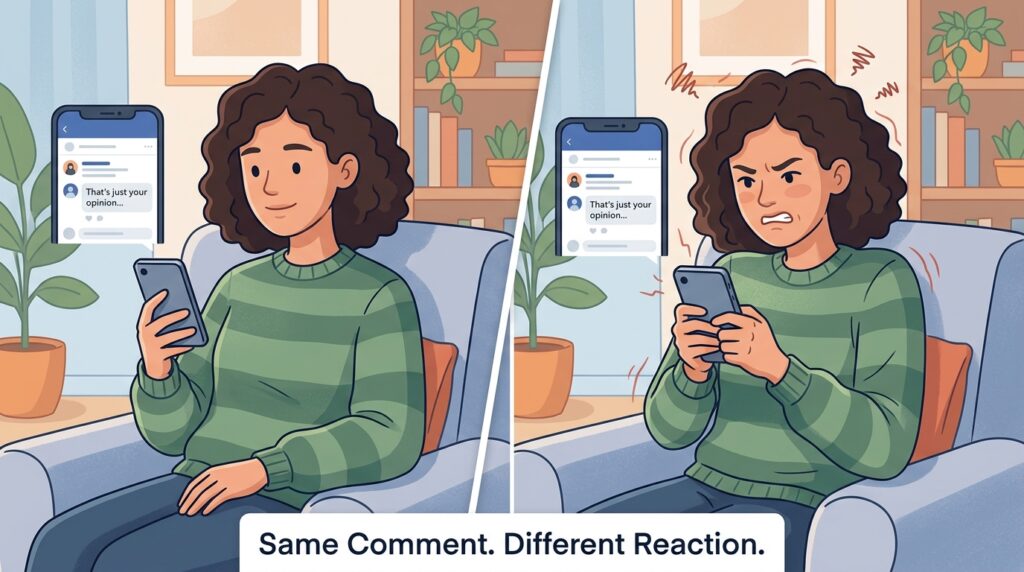
There’s a reason a single harsh comment can outweigh fifty kind ones in your memory. Psychologists call it negativity bias, our brains are wired to pay closer attention to threats than to praise, because in evolutionary terms, missing a threat was far more costly than missing a compliment. Online, that ancient wiring gets triggered by things that were never actually dangerous, like a stranger’s opinion about your haircut.
Add in the screen effect. People say things online they’d never say to your face, partly because there’s distance, and partly because there’s no immediate consequence. Researchers refer to this as the online disinhibition effect, and it explains a lot about why comment sections can turn ugly so fast.
It also matters just how common this experience is. The Pew Research Center’s survey on online harassment found that roughly four in ten American adults have personally experienced some form of online harassment, and that the more severe forms of it, including sustained harassment and physical threats, have grown more common over time. In other words, if you’ve been on the receiving end of a nasty comment, you’re in a very large group of people, not an unlucky outlier.
Knowing this won’t make the sting disappear instantly, but it does reframe things. The comment usually says more about the commenter’s mood, insecurities, or need for attention than it says about you.
Pause Before You Respond (Even If You’re Furious)
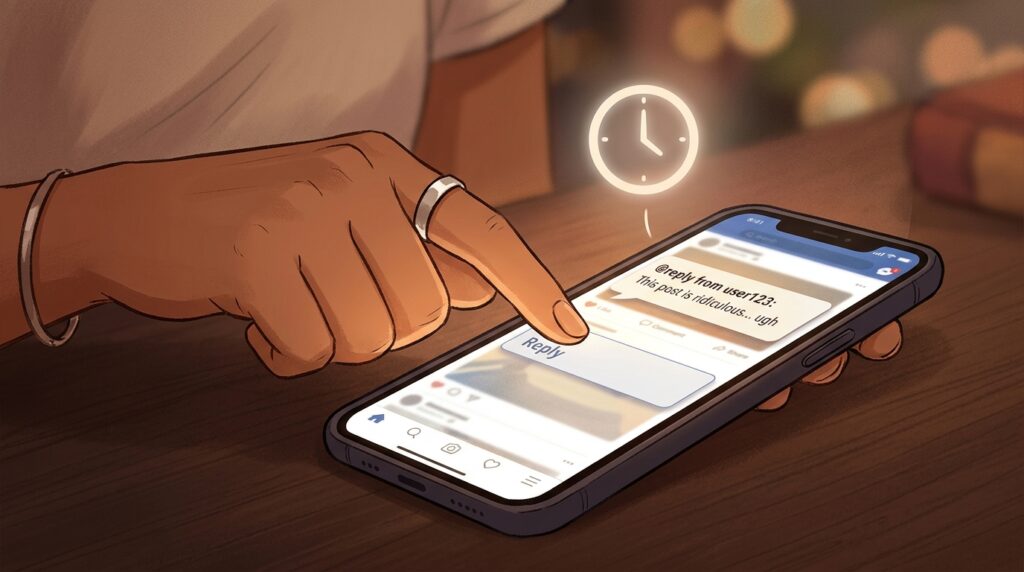
The single biggest mistake people make when learning how to respond to negative comments is replying in the first ninety seconds. That’s usually when emotion is highest and judgment is lowest.
Try this instead:
- Read the comment once, then put the phone or laptop down for a few minutes.
- Ask yourself if this is something you’d still be upset about tomorrow.
- Decide if the comment needs a response at all, many don’t.
This isn’t about suppressing your feelings. It’s about not handing a stranger the power to write your next sentence for you. A reply crafted after a short pause is almost always more measured, and measured replies tend to defuse situations instead of escalating them.
Sort the Comment Into a Category First
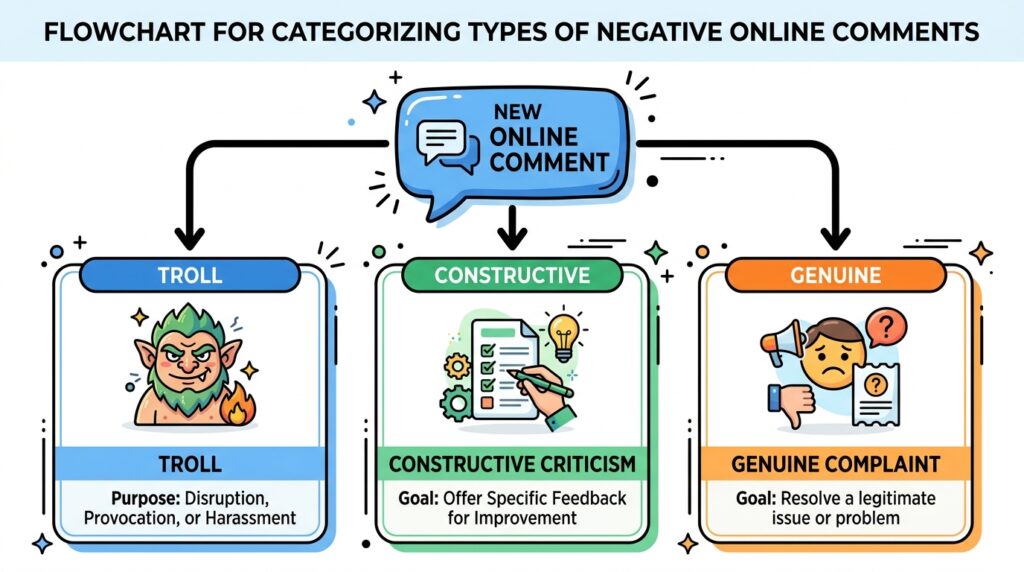
Not every negative comment deserves the same energy. Before deciding how to handle online criticism, quickly sort it into one of three buckets.
| Type of Comment | What It Looks Like | Best Response |
|---|---|---|
| Troll or spam | Insults, all caps, no real point, repeated across many posts | Ignore, hide, or block |
| Constructive criticism | Specific, calm, points to a real issue | Thank them, respond thoughtfully |
| Genuine complaint | Frustrated tone but a real problem (bad product, bad experience) | Acknowledge and offer to fix it |
Trolling often isn’t really about you. One widely cited industry estimate from a 2022 social media report suggests that a meaningful share of hostile comments come from accounts that are simply looking for a reaction, not from people invested in an actual conversation. If a comment fits that pattern, feeding it with a reply usually backfires.
Genuine complaints and constructive criticism are different animals entirely. Those are opportunities, and how you respond to them can shape how everyone else reading the thread sees you.
When to Respond and When to Let It Go
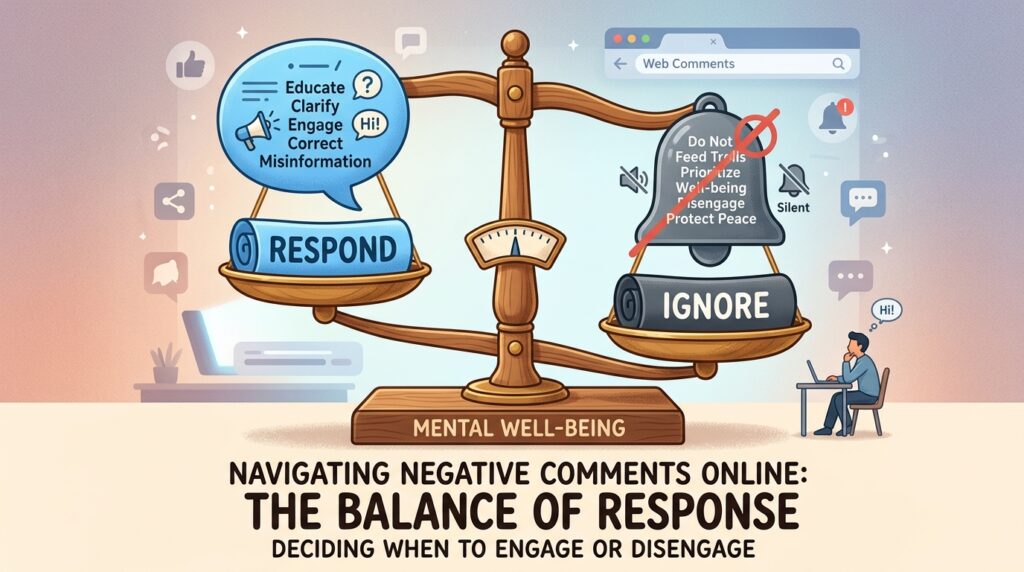
There’s no universal rule that works for every situation, but a few questions help most people decide quickly:
Respond if:
- The comment raises a fair point that others might also be wondering about
- It’s a customer or client complaint that needs resolving
- Silence could be misread as guilt or indifference
- You have something genuinely useful to add
Let it go if:
- The comment is purely an insult with no substance
- The person is clearly trying to provoke a reaction
- Responding would give a fringe opinion more visibility
- You’re emotionally triggered and not ready to reply calmly
A good general habit, borrowed from customer service teams that manage this at scale, is aiming to acknowledge legitimate concerns fairly quickly rather than letting them sit unanswered for days. Left unaddressed, a fair complaint can look like neglect, even if that was never the intention.
How to Write a Reply That De-escalates Instead of Fuels the Fire
If you decide a response is worth writing, structure matters more than wording. A simple four-part shape works for almost any situation:
- Acknowledge what they said, without agreeing to something untrue.
- Stay neutral in tone, no sarcasm, no defensiveness.
- Offer something concrete, an answer, a fix, or an invitation to continue privately.
- Close it out, don’t get pulled into a back-and-forth.
Here’s what that looks like in practice for a small business handling a review:
“Thanks for the honest feedback. We’re sorry the delivery took longer than expected. We’ve flagged this with our shipping partner and would like to make it right, feel free to message us directly.”
And here’s a version for a personal post that got a rude comment:
“I hear you, everyone’s entitled to their opinion. This is just what worked for me.”
Neither response argues, neither grovels, and both end the exchange on your terms rather than the commenter’s.
Platform-Specific Tactics
Every platform gives you different tools for managing comments, and knowing what’s available saves a lot of frustration.
- Instagram and Facebook: Both let you hide comments, restrict specific accounts (so their comments only they can see), filter out keywords automatically, and block repeat offenders.
- YouTube: Creators can hold comments with certain words for review, block users entirely, or turn off comments on individual videos.
- LinkedIn: Comments can be hidden or reported, and repeated harassment can be flagged directly to LinkedIn’s support team.
- Google and Yelp reviews: You generally can’t delete a review just because it’s negative, but you can publicly respond, and you can flag reviews that violate the platform’s policies, such as fake reviews or hate speech.
Using these built-in tools isn’t giving up, it’s comment moderation, the same thing any well-run online space uses to keep conversations useful.
Protecting Your Mental Health While You Do This
Here’s something that doesn’t get said enough: you’re allowed to log off. You don’t owe every commenter your attention, and you definitely don’t owe them your peace of mind.
A few boundaries that genuinely help:
- Set specific times to check comments, instead of refreshing all day.
- Mute notifications for a post that’s attracting a pile-on.
- Talk to someone you trust about what you’re reading, saying it out loud often shrinks it.
- Remember the audience is usually small. Most people scrolling past a nasty comment don’t remember it five minutes later.
If the comments cross into repeated harassment, threats, or targeted abuse rather than one-off rudeness, that’s a different situation entirely, and it’s worth treating it that way. Researchers at the University of Washington who study this area have pointed out that documenting the abuse and reaching out for support early tends to help people cope better than trying to handle it silently, as noted in their guidance on responding to online harassment.
When It Crosses the Line Into Harassment
There’s a real difference between someone disagreeing with you rudely and someone stalking, threatening, or repeatedly targeting you. If you’re dealing with the second kind, here’s a practical sequence:
- Screenshot everything, including usernames, dates, and the full thread.
- Do not delete the evidence, even if you block the person.
- Report it on the platform using its harassment or abuse reporting tool.
- Escalate if there’s a threat to your safety. In the United States, credible threats or ongoing cyberstalking can be reported to the FBI’s Internet Crime Complaint Center, which is the federal government’s intake point for these kinds of complaints.
- Contact local law enforcement if you feel physically unsafe, since online threats can sometimes be connected to real-world risk.
This step isn’t about every rude comment, it’s specifically for patterns of targeted, sustained abuse. Knowing the option exists, and that it’s a normal, sanctioned path, tends to reduce the feeling of helplessness that comes with this kind of situation.
Turning Criticism Into Something Useful
Not every hard truth arrives gently, and some of the most useful feedback you’ll ever get will show up looking like an insult. Before dismissing a comment entirely, it’s worth asking:
- Is there a kernel of truth buried in the delivery?
- Has more than one person mentioned this same issue?
- Would fixing this actually improve the product, post, or experience?
Businesses that treat criticism this way tend to come out ahead. A well-known example is how Domino’s Pizza publicly used blunt customer criticism from years ago as the foundation of a brand turnaround, rather than burying it. That kind of transparency, choosing to learn instead of getting defensive, is often what separates brands and creators who grow a loyal following from those who don’t.
If you create content regularly, building a broader social media reputation management habit, one that includes regular audience engagement and a consistent tone, tends to make any single piece of criticism feel a lot smaller in context.
Expert Tips for Handling Repeat Offenders
- Don’t engage the same troll twice. If someone has already shown you they’re not arguing in good faith, a second reply almost never changes that.
- Use response templates for repeated versions of the same complaint, it saves emotional energy and keeps your tone consistent.
- Keep a private note of usernames who’ve crossed a line before, so you can act faster the second time.
- Involve a moderator or team member if you run a page with heavy traffic, so no single person is absorbing all the negativity alone.
- Revisit your settings every few months. Platforms update comment filtering tools often, and features you didn’t have a year ago might now be available.
Responding Publicly vs. Privately: Pros and Cons
| Approach | Pros | Cons |
|---|---|---|
| Public reply | Shows transparency, reassures other readers, can prevent copycat comments | Everyone sees it, including the tone if it goes wrong |
| Private message | Keeps things calmer, gives more room to resolve details | Other viewers don’t see the resolution, which can leave a one-sided impression |
| Both (public acknowledgment, private follow-up) | Combines visibility with a calmer resolution space | Takes more time and coordination |
Most customer service teams lean toward the third option for genuine complaints: a short, public acknowledgment followed by a private conversation to sort out details.
Building Long-Term Resilience
The goal isn’t to become numb to criticism, that usually backfires by making you numb to helpful feedback too. The goal is building a thicker, more selective filter.
A few habits that help over time:
- Keep a folder of genuinely kind messages you’ve received, and revisit it after a rough day.
- Remind yourself that the loudest voices in a comment section are rarely representative of your whole audience.
- Separate your sense of self-worth from any single post’s performance or reception.
- Give yourself permission to take breaks from platforms that feel heavier than they’re worth.
Over months and years, this filter becomes automatic. The same comment that would have ruined your afternoon a year ago barely registers now, not because you stopped caring, but because you learned where to put your attention.
Frequently Asked Questions
How do you deal with negative comments online without getting upset?
Pause before replying, sort the comment by type, and remind yourself that most hostile comments say more about the commenter than about you. Muting notifications for a short period also helps create emotional distance.
Should you delete negative comments?
Only if they violate platform rules, contain hate speech, spam, or threats. Deleting fair criticism just because it’s uncomfortable can look worse than leaving it up with a calm reply.
Is it okay to ignore hate comments completely?
Yes, ignoring is a valid strategy, especially for trolling or comments with no real substance. Engaging with bad-faith comments rarely changes the outcome and often invites more of the same.
What’s the difference between criticism and harassment?
Criticism, even harsh criticism, usually addresses something specific about your work, product, or opinion. Harassment is repeated, targeted, and often includes threats or attempts to intimidate. Harassment can and should be reported.
How can businesses protect their reputation from negative comments?
By responding quickly to legitimate complaints, using platform moderation tools for spam and abuse, and treating recurring criticism as useful feedback rather than something to hide from.
Final Thoughts
Negative comments are one of the few guaranteed side effects of putting anything online, whether that’s a photo, an opinion, or a product. What changes the outcome isn’t whether they show up, they will, it’s how quickly you can sort the noise from the signal, respond (or not respond) with intention, and protect your own headspace along the way.
If you take one thing from this, let it be this: a comment box does not get a vote in how you feel about yourself. It’s just a box.