
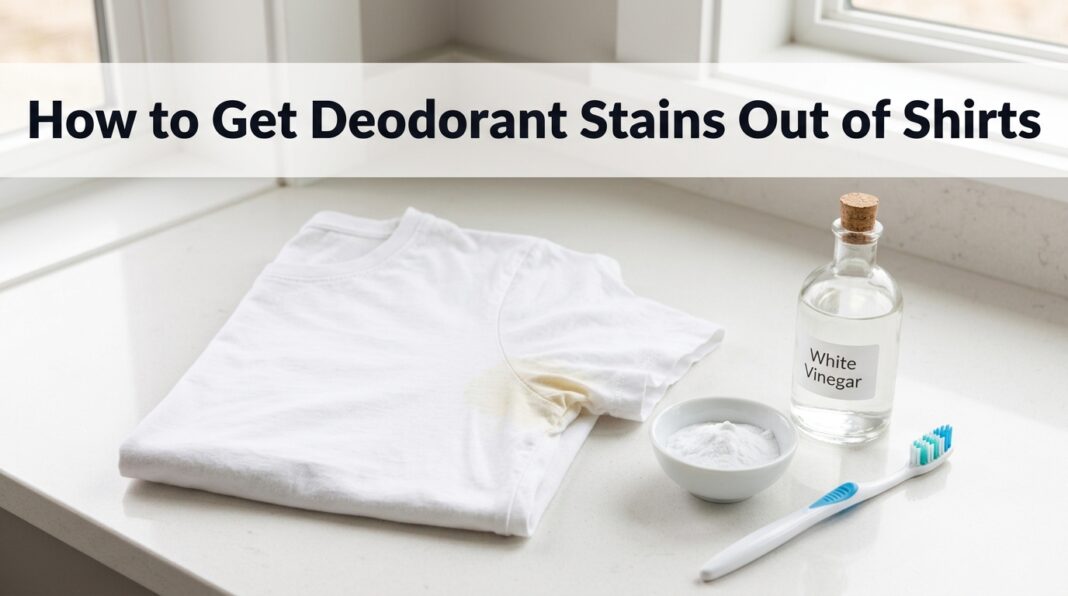
You pull a black shirt over your head, glance in the mirror, and there it is: a chalky white smear right where your arm meets your shoulder. Or maybe it’s the opposite problem, a yellowish, slightly stiff patch that’s crept into every white t-shirt in your drawer no matter how carefully you wash them.
Both situations come down to the same root cause, and both are fixable. How to get deodorant stains out of shirts really comes down to matching the right method to the type of stain you’re dealing with, since white marks and yellow buildup are actually two different problems wearing the same disguise.
This guide walks through both, why they happen, what actually removes them, and how to keep them from piling back up week after week.
Why Deodorant Leaves Two Completely Different Stains
It helps to understand what’s actually happening before reaching for a cleaning product, since the two most common deodorant stains form in completely different ways.
White marks happen when deodorant residue transfers straight onto fabric before it’s had time to fully dry against your skin. This is mostly cosmetic. As one clothing brand’s care team explains, immediately putting on a dark shirt after applying deodorant will often leave white marks, and the fix is usually as simple as light friction against the fabric.
Yellow buildup is a different story. It forms over time as sweat, body oils, and the aluminum compounds in many antiperspirants react and oxidize inside the fibers. This kind of stain gets progressively harder to remove the longer it sits, which is why an old undershirt often looks far worse than one you started wearing last month.
The Dry Method for Fresh White Marks
If you catch the mark right after it happens, you often don’t need water or cleaning products at all.
- Grab a pair of nylon stockings, a dry towel, a clean sock, or even a dryer sheet.
- Rub it firmly but gently over the white mark in short strokes.
- The friction lifts the powdery residue away from the fabric surface before it has a chance to bond with the fibers.
This trick works because fresh deodorant residue is mostly loose particles sitting on top of the fabric rather than something that’s chemically stained it yet. It’s the fastest fix on this entire list and takes less than a minute.
How to Get Deodorant Stains Out of White Shirts
White shirts show yellow buildup more obviously than any other color, which makes them the most common complaint people search for help with. A layered approach works best here.
- Mix baking soda with a small amount of water until it forms a thick paste.
- Apply the paste directly onto the stained area and let it sit for twenty minutes to overnight, depending on how set-in the stain is.
- Gently scrub with a soft-bristled brush or an old toothbrush.
- Rinse and wash in hot water, checking the care label first.
For particularly stubborn yellowing, a solution combining hydrogen peroxide, baking soda, and warm water gives an extra boost, since hydrogen peroxide works as a mild, color-safe bleaching agent on white fabric specifically.
Removing Deodorant Marks from Black and Dark Shirts
Image prompt: Photograph of a dark navy or black shirt laid flat with a small amount of diluted white vinegar being applied to the underarm area using a spray bottle, indoor lighting, focused composition. Alt text: treating deodorant stain on black shirt with vinegar solution
Dark fabrics need a gentler touch, since anything too abrasive or bleach-based risks fading the color right along with the stain.
- Start with the dry friction method described earlier for surface-level marks.
- For anything that doesn’t lift with dry friction, dilute white vinegar with water in a one-to-three ratio.
- Dab the mixture onto the stain and let it sit for about thirty minutes.
- Gently scrub with a clean toothbrush, then rinse and wash in cold water to help protect the dye.
Skip chlorine bleach entirely on colored fabric. If you want extra whitening power on a light gray or pastel item, an oxygen-based bleach alternative is a safer bet than chlorine, which can strip color unevenly and leave blotchy patches behind.
How to Get Deodorant Stains Out of Shirts with Vinegar
Vinegar deserves its own mention since it’s genuinely one of the most reliable, budget-friendly options for both fresh and older stains, and it works on nearly any fabric type.
Soak the stained garment in a bowl of white vinegar for about an hour. This loosens the residue and helps neutralize any lingering odor trapped in the fibers along with the visible stain. After soaking, lightly agitate the stained area with a soft brush, then run the shirt through a regular wash cycle. For anyone dealing with recurring stains across a whole drawer of shirts, keeping a dedicated bowl or basin just for pretreatment soaking makes this a much faster weekly habit.
Lemon Juice for Natural Brightening
Lemon juice works through natural acidity combined with a mild bleaching effect when paired with sunlight, making it a solid option for anyone who prefers to skip commercial bleach products entirely.
Mix equal parts lemon juice and water, then pour the solution directly over the stain. For white or light colored shirts, leaving the treated fabric in direct sunlight for about an hour noticeably boosts the brightening effect, since UV exposure helps break down the yellow discoloration further. Rinse thoroughly before washing as usual.
Keep this one away from dark or brightly colored shirts, since the natural bleaching effect can lighten dye just as easily as it lightens a stain.
Treating Set-In, Stubborn Deodorant Buildup
Some stains have been through the wash dozens of times already and have essentially bonded with the fabric. These take more patience than a single treatment.
- Combine hydrogen peroxide, baking soda, and warm water in equal parts to form a thicker paste.
- Apply generously and let it sit for at least an hour, ideally overnight for heavily set-in stains.
- Wash on the hottest setting the fabric allows, then check the stain before drying.
- Skip the dryer if any discoloration remains, since heat can permanently set what’s left. Air dry instead and repeat the treatment if needed.
Really stubborn buildup sometimes takes two or three full treatment cycles before it fully lifts, which is normal and doesn’t mean the method isn’t working.
Preventing Deodorant Stains Before They Start
A few small changes in your routine cut down on staining significantly over time.
- Apply deodorant in a thin, even layer rather than a thick swipe, and give it a minute or two to fully dry before getting dressed.
- Wash shirts promptly after wearing them instead of letting sweat and residue sit for days.
- Skip fabric softener on shirts prone to underarm buildup, since it can trap residue rather than help release it.
- Choose a formula labeled to reduce marks and buildup if staining has been a recurring issue no matter what you try.
- Rinse the underarm area with cold water between wears if a full wash isn’t practical, which slows down buildup considerably.
None of these habits eliminate the occasional stain completely, but together they noticeably stretch out how long shirts stay stain-free.
What Not to Do When Treating Deodorant Stains
A handful of habits tend to make these stains worse rather than better.
- Using hot water before checking the stain type. Heat can set protein-based sweat residue permanently before it’s fully treated.
- Drying a stained shirt before confirming it’s gone. Dryer heat locks in whatever discoloration is left behind.
- Using chlorine bleach on colored fabric. This almost always causes uneven fading rather than clean stain removal.
- Scrubbing too aggressively. Hard rubbing can wear down fibers and actually push residue deeper into the weave.
- Ignoring the care label. Delicate fabrics like silk or certain synthetic blends need a gentler approach than cotton.
Comparing the Main Removal Methods
| Method | Best For | Pros | Cons |
|---|---|---|---|
| Dry friction (nylon or dryer sheet) | Fresh white marks | Instant, no products needed | Doesn’t work on set-in stains |
| Baking soda paste | White and light fabrics | Gentle, widely available | Needs sitting time |
| White vinegar soak | Most fabric types | Removes odor and residue | Smell fades but takes time to air out |
| Lemon juice and sun | White or light fabrics only | Natural, no chemicals | Not safe for dark colors |
| Hydrogen peroxide paste | Stubborn, set-in buildup | Strong lifting power | Only safe on white or very light colors |
Expert Tips for Long-Term Shirt Care
- Rotate deodorant brands occasionally if one formula consistently causes more buildup than others, since ingredients vary widely.
- Keep a small stain-treatment kit, baking soda, white vinegar, and an old toothbrush, right next to the laundry hamper for quick pretreatment.
- Wash new white shirts before their first wear to remove manufacturing residue that can make early staining worse.
- Separate heavily stained shirts into their own wash load so residue doesn’t transfer onto cleaner items.
- Address a stain the same day it happens whenever possible, since same-day treatment success rates are consistently higher than treating something a week later.
Frequently Asked Questions
Does toothpaste remove deodorant stains?
Plain white toothpaste can help with very fresh, minor marks due to its mild abrasive texture, but it’s not as reliable as baking soda or vinegar for anything set-in, and gel-based toothpaste won’t work at all.
Can deodorant stains be removed after multiple washes?
Yes, though it takes more effort. Older, set-in stains usually need a stronger treatment like the hydrogen peroxide and baking soda paste, sometimes repeated two or three times before they fully lift.
Is it safe to use bleach on deodorant stains?
Only on solid white fabric, and only in moderation. Bleach can actually worsen yellow staining on some fabrics by reacting with existing residue, so oxygen-based bleach alternatives are generally the safer first choice.
Why do my shirts still stain even with antiperspirant that claims to prevent marks?
No formula eliminates staining completely, since it depends on your body chemistry, how much you sweat, and how the product is applied. Thin, even application and letting it dry fully before dressing still make the biggest difference.
How often should I wash shirts to prevent deodorant buildup?
Ideally after every wear, especially for shirts worn during exercise or in hot weather. Letting sweat and deodorant residue sit for multiple wears before washing is one of the biggest contributors to stubborn buildup.
Bringing It All Together
Deodorant stains feel like an unavoidable part of owning clothes, but they’re genuinely one of the more manageable laundry problems once you understand what’s actually causing them. Fresh white marks need almost nothing beyond a little friction, while yellow buildup responds well to a baking soda or vinegar treatment given enough time to work. Match the method to the stain, treat it early, and most shirts bounce back looking like nothing ever happened.